
Exhibition Explores How LGBTQ+ Artists From Africa and Its Diaspora Are Part of a Larger, Joyful Story of African Art History
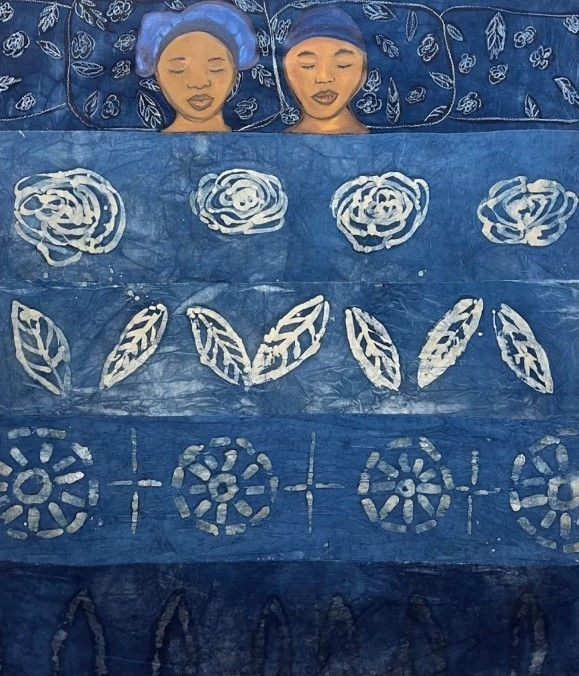
The Smithsonian’s National Museum of African Art has announced “Here: Pride and Belonging in African Art,” opens Jan. 23–Aug. 23. Artists’ voices are central to this exhibition, which features works by Zanele Muholi, Toyin Ojih Odutola, Rotimi Fani-Kayode, Leilah Babirye, Jim Chuchu, Ṣọlá Olúlòde, among many LGBTQ+ artists from across Africa and its diaspora. “Here” is based on years of close collaboration and dialogue with these artists and their communities. Through their art, they invite the viewer into their worlds and explore themes of identity and belonging. “Here” is the largest exhibition on this subject to date, with nearly 60 artworks, demonstrating how they are a part of a larger story of African art history.
While their experiences are unique to them, they speak to issues that unite everyone: the importance of family, spirit, standing up for oneself and others, imagining the future, making intimate connections, finding belonging, embracing potential and, above all, experiencing joy. They are united by a simple, shared declaration: We are here and always have been and will be.
These artists’ works are deeply connected to their identities and lived experiences, reflecting a wide range of perspectives where social and cultural freedoms vary widely. Through studio visits, interviews and ongoing dialogue with artists from across the continent, the curators have fostered meaningful relationships built on trust and mutual respect. This collaborative approach has created an environment where artists feel supported in sharing their stories and art, enriching the exhibition with authenticity and depth.
“Here: Pride and Belonging in African Art” includes a diverse range of media, from painting, photography, sculpture and works on paper to installation, video and digital art.
Connecting people with the freedom these artists feel to be themselves and to share their stories with the world is at the core of the exhibition led by co-curators Serubiri Moses (Hunter College, City University of New York/Bard College) and Kevin D. Dumouchelle (National Museum of African Art). Dumouchelle also led a related forthcoming publication from Smithsonian Books to be distributed by Penguin Random House.
“‘Here’ adds to our museum’s founding mission to honor the cultural heritage of Africa and to foster cross-cultural understanding and communication,” said John K. Lapiana, director of the National Museum of African Art. “I want to extend my deepest thanks to all the artists who are participating in this exhibition. Their works offer us new perspectives and encourage us to broaden our understanding of contemporary African art and its study and presentation.”
“These stories have always been a part of African art history, even if that history remains underwritten,” Dumouchelle said. “‘Here’ uncovers that history. As a field-leading institution, it’s important that we tell nuanced narratives about artists working in Africa and its diaspora to increase our understanding of the art historical canon.”
“It is an honor to participate as a curator of the upcoming survey ‘Here’ at the National Museum of African Art,” Moses said. “In my research for the exhibition, I made it a point to think about countries beyond two oft-cited geographies of South Africa and Nigeria. As a result, the exhibition includes artists from across the continent.”
Credit
The exhibition has been supported by a major grant from Fisher Arts Impact Fund.
About the National Museum of African Art
The Smithsonian’s National Museum of African Art is the only national museum in the United States dedicated to the collection, conservation, study and exhibition of Africa’s arts across time and media. The museum’s collection of over 13,000 artworks spans more than 1,000 years of African history and includes a variety of media from across the continent.
Beginning as a private educational institution in Washington, D.C., in 1964 to promote cross-cultural understanding, the museum celebrated its 60th anniversary in 2024. Founded by Warren M. Robbins, a former U.S. Foreign Service officer, the museum opened with Robbins’ personal collection in a Capitol Hill townhouse that had once been the home of Frederick Douglass. Robbins was inspired by the Civil Rights Movement and motivated by a desire to share how African art inspired Western art. The museum joined the Smithsonian Institution in 1979 and has continued to expand its vision and collection for six decades.