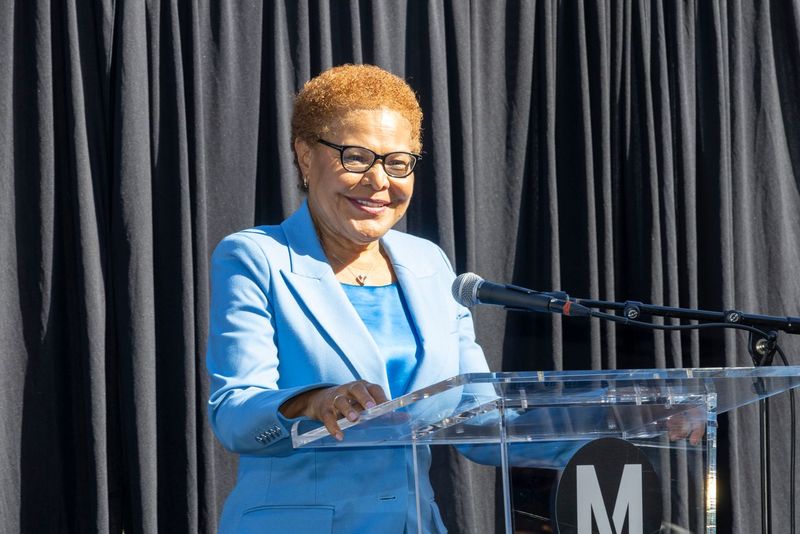
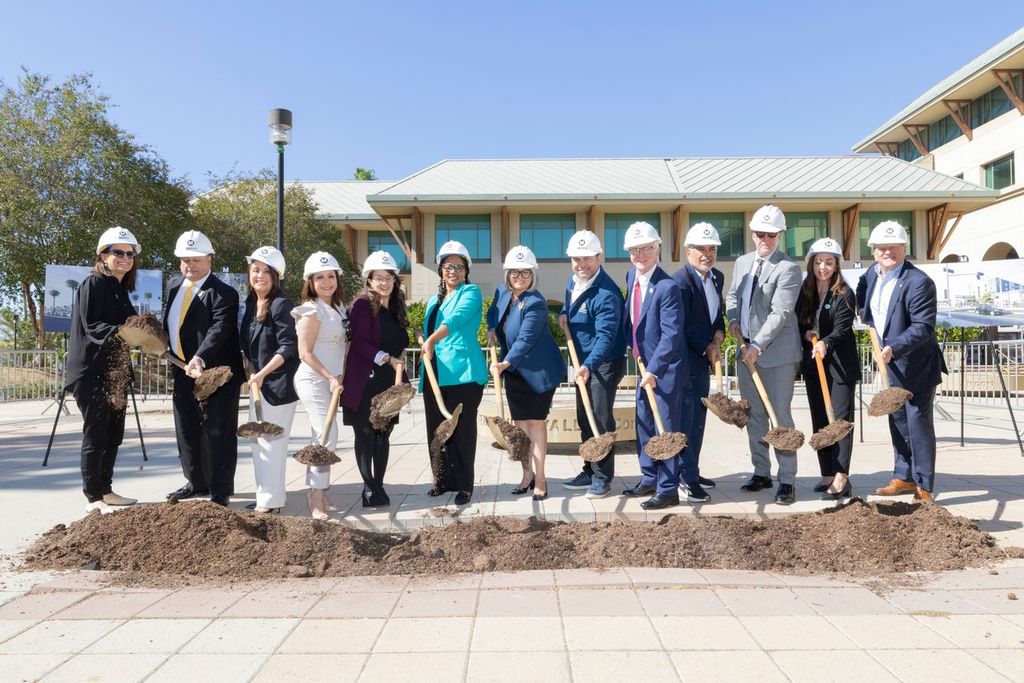
Project creates first local-stop commuter rail service on Van Nuys Boulevard in more than 70 years
The 6.7-mile line will run along Van Nuys Boulevard through the densely populated and transit-dependent communities of Van Nuys, Arleta, and Pacoima. Roughly 19 percent of households in the project corridor are fully transit-dependent, without a personal vehicle, compared to just eight percent for Los Angeles County as a whole. It is the first local-stop commuter rail service to roll down Van Nuys Boulevard in more than 70 years.
The project integrates directly with regional transit networks, providing smooth and immediate transfers to Metrolink, Amtrak, and the Metro G Line Bus Rapid Transit (BRT) line, maximizing county reach.
“This Metro investment is a game changer for our community,” said Metro Board Member and LA County Supervisor Lindsey Horvath. “Our Valley residents deserve faster, easier, and safer connections between Van Nuys and San Fernando, enhancing access to jobs, healthcare, and essential services throughout the Valley.”
The 11 new at-grade light rail stations will feature modern shade structures and safety improvements and will operate at street level in the center of Van Nuys Boulevard. These stations are located approximately three-quarters of a mile apart and include: Van Nuys Metro G Line, Victory, Vanowen, Sherman Way, Van Nuys Metrolink, Roscoe, Nordhoff, Woodman, Arleta, Laurel Canyon and San Fernando.
Along with new stations, the project delivers major streetscape upgrades, including ADA-compliant sidewalks, safer pedestrian crossings and improved roadway design.
Economic Opportunity
Construction and operations are projected to inject more than 18,000 direct and indirect jobs into the local economy. Metro is using a dedicated Project Labor Agreement/ Construction Careers Policy to guarantee that good-paying construction jobs go to local community residents. In addition, the rail line will seamlessly connect Valley riders to 150,000 employment opportunities across the region.
Metro will mitigate construction impacts through its Business Interruption Fund (BIF) for local “mom and pop” shops. Other programs include the Business Solution Center (BSC) for hands-on business assistance and support services to small businesses along the route, and the Eat, Shop, Play program that provides hands-on support and marketing assistance for local businesses.
“This marks a historic milestone for the East San Fernando Valley and the working-class communities that have waited generations for this kind of investment,” said Metro Board Member and Los Angeles City Councilmember Imelda Padilla. “As someone who grew up in the Valley, I know how much reliable public transportation means to our families. Bringing rail back to Van Nuys Boulevard after more than 70 years is about more than connecting people to jobs, schools, and essential services. It is about creating new opportunities for our residents, supporting our local businesses, and making sure the communities that have called this corridor home for generations are part of its future.”
Funding
The project’s estimated cost of construction is $3.998 billion and will be funded through a variety of federal, state, and local sources, including voter-approved sales tax Measure M.
Metro secured an $893 million grant from the U.S. Department of Transportation to finalize the project’s overarching funding layout. The grant marks the first Full Funding Grant Agreement (FFGA) executed under the Federal Transit Administration’s Expedited Project Delivery Pilot Program, which leverages unique federal channels to speed up major fixed-guideway capital builds.
The East San Fernando Valley Light Rail Transit Project serves as the core backbone of a broader multi-billion-dollar transit surge coming to the San Fernando Valley over the next 10 years.
“The San Fernando Valley is key for Metro in creating a connected Los Angeles County,” said Metro CEO Stephanie Wiggins. “We want to improve access and mobility for the diverse communities along the route who depend on transit. The new East San Fernando Valley Light Rail Transit Project is a huge step in providing access to jobs and the economic boost from the project will benefit local residents and the economy.”
About Metro
The Los Angeles County Metropolitan Transportation Authority (Metro) is building the most ambitious transportation infrastructure program in the United States and is working to greatly improve mobility. Metro is the lead planner, funder, builder, and operating agency for public transportation in L.A. County and carries nearly 1 million boardings daily on a fleet of 2,200 low-emission buses and six rail lines. The latest customer experience survey, fielded in July 2026, showed that customer satisfaction with Metro has risen to 87%.