
New Community Resource Center Established as Centralized Location to Serve Impacted Residents, Workers, and Businesses Owners
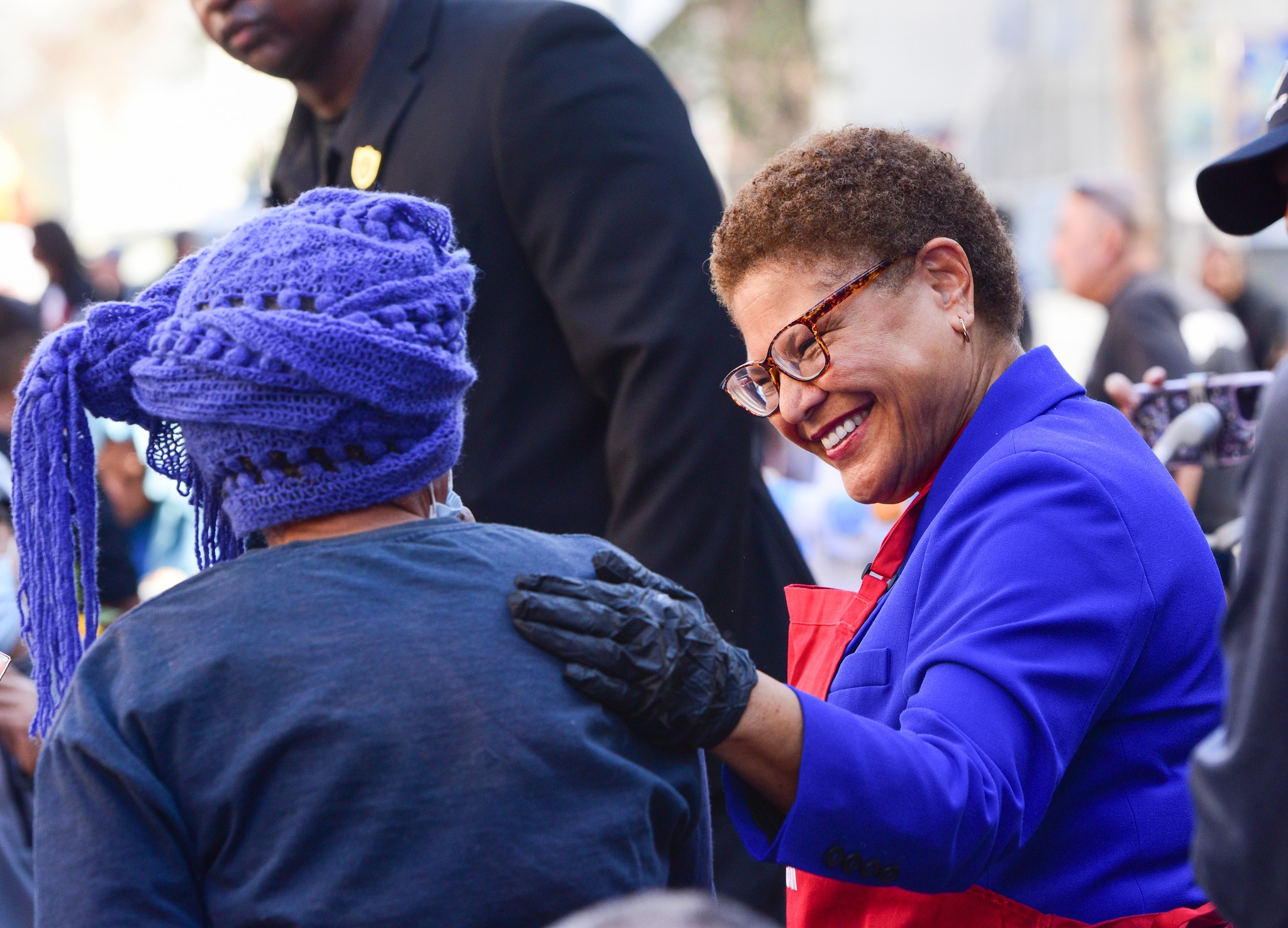
LOS ANGELES – Mayor Karen Bass today was joined by Councilmember Ysabel Jurado, Supervisor Hilda Solis, LAFD Chief Jaime Moore, and community leaders to issue two Emergency Executive Orders to: establish a centralized command structure to execute aggressive remediation timelines; surge City resources to support impacted residents, workers, and businesses; deploy mobile health screening and mental health stations in the community; pursue legal options for cost recovery; and strengthen environmental oversight of industrial facilities. She held the signing at the City’s Community Resource Center (Lou Costello Jr. Recreation Center, 3141 E. Olympic Blvd., Los Angeles, 90023) where residents can connect to resources, including air purifiers, food kits, health services, and financial assistance.
“Those who know Boyle Heights know that this fire did not happen in a vacuum,” said Mayor Bass. “Boyle Heights deserves transparency and accountability. These Emergency Executive Orders will mobilize additional resources that impacted residents, workers, and business owners need, implement aggressive oversight over the remediation process and long-term environmental monitoring, and ensure this community gets the answers it deserves.”
“Boyle Heights residents deserve more than reassurances – they deserve information they can see, understand, and trust,” said Councilmember Ysabel Jurado. “Last week, I called for public-facing air quality information because families shouldn’t have to rely on rumors, technical reports, or social media to know what’s happening in their own neighborhood. Today’s Emergency Executive Orders are an important step toward the transparency our community has been demanding, and I’ll keep pushing until the information is updated regularly, available in multiple languages, paired with clear public health guidance, and backed by real accountability.”
On June 20, Mayor Bass issued a Declaration of Local Emergency which was followed by an emergency declaration from Governor Newsom. These declarations mobilized resources and allowed the Mayor to ensure the City has adequate support and capacity to respond. In response to the State of Emergency, the LAFD successfully acquired critical mutual aid from various partners, including the Los Angeles County Fire Department, the Fire Departments of Beverly Hills, Culver City, and Orange, as well as Anaheim Fire and Rescue, the Ventura County Fire Department, and additional agencies. LAFD officially announced the knockdown of the fire on Wednesday, June 24.
Read both Executive Orders below:
EMERGENCY EXECUTIVE ORDER NO. 1
Boyle Heights Recovery & Environmental Justice
Issue Date: June 29, 2026
Subject:Emergency Response and Recovery Actions following the Lineage Warehouse Fire
INTRODUCTION
On June 17, 2026, a fire ignited at the Lineage cold storage facility located at 1400 South Los Palos Street in the Boyle Heights community of the City of Los Angeles.
The fire burned for eight (8) days within a heavily insulated, approximately 491,000-square-foot cold storage structure, requiring round-the-clock firefighting operations by the Los Angeles Fire Department and mutual aid partners.
The incident resulted in a shelter-in-place order for neighboring residents and extended air quality advisories from the South Coast Air Quality Management District (SCAQMD) impacting families in central Los Angeles County, the San Gabriel Valley, the East San Fernando Valley, and the Northwest San Bernardino Valley.
While the shelter-in-place order has been lifted, an estimated 85 million pounds of frozen food product were stored within the facility; the loss of refrigeration has caused or will cause the spoilage and decomposition of all or substantially all of that product, which constitutes a public nuisance.
The community of Boyle Heights, a historically under-resourced and environmentally burdened neighborhood, requires transparent, coordinated, and expedited governmental action at City, County, State and Federal levels.
Accordingly, to defend public health, protect frontline communities, and enforce accountability across our city’s industrial areas, pursuant to City Charter Section 231, subsection (i), and under the provisions of the Los Angeles Administrative Code Section 8.29 that authorize me to promulgate, issue and enforce emergency rules, regulations, orders, and directives, I hereby declare the following order to be necessary for the protection of life and property and I hereby order, effective immediately, that:
Mobilizing City Resources for Boyle Heights
-
The Emergency Management Department (EMD) and Department of Recreation and Parks (RAP) are directed to establish a Community Resource Center with direct assistance, resources, and information for residents, workers, and small businesses.
-
EMD, in partnership with RAP, the Mayor’s Office and Council District 14, are directed to coordinate with the Los Angeles County Department of Public Health (LA County Public Health), federally qualified health clinics and private partners on the deployment of mobile health screening stations to provide direct medical attention and mental health resources at community centers and other locations to be determined in collaboration with community partners. The Department of Transportation (LADOT) shall provide free transportation to City established centers.
-
LADOT is directed to increase the number of buses deployed for the DASH Boyle Heights/East LA route to run every 10 to 15 minutes, and to pause fare collection on this route, effective immediately and until the emergency declaration has been lifted. LADOT is directed to coordinate with EMD and to post or carry fliers with the most up-to-date information.
-
LADOT is directed to pause fare collection on CityRide services in the Boyle Heights/East LA service area effective immediately and until the emergency declaration has been lifted.
-
EMD is directed to initiate requests for necessary resources from the County and State to mitigate potential health risks to the community, including but not limited to N95 respirator masks, air purifiers, and enhanced air quality monitoring and technical support, and other emergency supplies available through the state’s logistics network.
-
All City Departments shall issue all health and related incident advisories in Spanish and English and other languages primarily spoken in affected areas. City Departments shall request the same of their County and regional agency counterparts, including the LA County Public Health and South Coast Air Quality Management District (SCAQMD).
-
EMD to request that SCAQMD continue air quality monitoring for particulate matter, volatile organic compounds (VOCs), and other pollutants of concern in Boyle Heights, Maravilla, East Los Angeles, El Sereno, City Terrace, and other locations as needed for the duration of remediation. EMD is directed to request that LA County Public Health and SCAQMD expand public awareness of existing reporting tools and localized air monitoring data, instruct residents in these communities on how to check air quality using mobile apps and online maps, and notify residents in English and Spanish on how to sign up for email air quality advisories.
-
EMD is directed to work with the responsible entity in coordination with SCAQMD to request their third-party contractor conducting air quality monitoring make their air quality data publicly available and to ensure it is communicated in a format that is easily understood to the public. Additionally, EMD is directed to request that the responsible entity make its Community Air Monitoring plan available to the public.
-
Los Angeles Housing Department, is directed to work with community organizations such as Stay Housed LA and the Mayor’s Fund, to educate Boyle Heights residents on renter protections and safe living conditions.
Commencing Remediation & Recovery Now
-
The Fire Department is directed to maintain a minimum of one (1) fire company on standby during all active interior removal and demolition until re-ignition risk is abated.
-
Los Angeles Sanitation (LASAN) through its Watershed Protection Program is directed to provide a report to the Mayor and Council on potential impacts to stormwater drains, channels, and the LA River.
-
LASAN is directed to formally request a Cleanup and Abatement Order from the Los Angeles Regional Water Quality Control Board to address any toxic runoff from the fire.
-
LASAN, in coordination with the Southern California Air Quality Management District, Los Angeles County Department of Public Works, LACDPH, and DTSC is directed to monitor the appropriate removal of debris, organic waste, and clean-up of the site in accordance with an approved remediation plan. Additionally, LASAN is directed to enforce compliance with MS4 permit requirements, adherence to appropriate dust mitigation measures during remediation, and work with the above County and State agencies to monitor soil testing of impacted properties.
-
The Fire Department, in coordination with the LASAN, is directed to submit a formal technical referral to LA County Public Health, providing all necessary data to request an immediate Health Officer Order declaring decomposing organic matter at the facility a public health nuisance.
-
The Department of Water and Power and the Mayor’s Office of Strategic Partnerships, are directed to identify funding and develop public-private partnerships to address indoor air quality for neighboring residents. Such measures should have the aim of reducing entry points for smoke and airborne contaminants and consider how to weatherize homes and multi-family homes, install energy efficient cooling and heating systems, and improve poorly-sealed housing.
-
LASAN is directed to coordinate with LA County Public Health, South Coast Air Quality Management District (SCAQMD), Department of Toxic Substance Control (DTSC), academic research partners and other government and non-governmental entities to implement a long-term environmental monitoring program for Boyle Heights and East LA.
-
CID is directed to work with the Mayor’s Office of Strategic Partnerships to coordinate with philanthropic and community partners to provide direct financial relief and other support to residents, small businesses, open air workers, and other workers affected by the warehouse fire and its aftermath.
Planning for Future Preparedness
-
City Planning and the Department of Building and Safety (LADBS) are directed within 45 days to analyze and report on existing concentrated industrial land use facilities located within close proximity to incompatible sensitive land uses such as homes, schools, and other sensitive uses within the City of Los Angeles and to evaluate potential changes to current zoning and land use policies to reduce cumulative health impacts from existing facilities and proposed new facilities.
-
Subsequent to the report mentioned above (in III(A)) Civil, Human Rights and Equity Department, CID and City Planning – in partnership with the Mayor’s Office and Council Offices – are directed to conduct community listening sessions across the City in the most impacted communities. Additionally, the departments listed above are directed to utilize other community engagement and/or outreach tools to reach residents in the most impacted communities.
-
After the cause of fire is determined, the Fire Department and LADBS are directed to analyze and report to the Mayor’s Office on existing state and local building and fire code standards for structures similar to the Lineage Warehouse, and provide recommendations on where regulations could be amended to mitigate fire risk and improve the ability of LAFD to quickly and effectively manage similar types of fires.
-
The Fire Department is directed to report on firefighting approaches, challenges, and recommendations in addressing fires occurring in structures similar to the Lineage Warehouse in Los Angeles and other jurisdictions.
-
The Fire Department, in consultation with other departments, is directed to assess existing fire standards for industrial cold storage facilities, rooftop solar arrays, and other high-risk industrial facilities, and propose a tier of reforms dependent on the chemicals used and/or stored, including additional mandatory fire-suppression system inspection cycles, surety bonds, and other recommendations to strengthen standards. The Fire Department is further directed to work with the California Environmental Protection Agency and other relevant state agencies to develop hazardous material reforms that enhance the safety of communities and the environment surrounding high-risk industrial facilities.
-
EMD, in coordination with City Departments, is directed to develop a system for the efficient distribution of emergency supplies and a protocol for clear communication to Angelenos during emergencies. The protocols should include how to partner with community organizations and coordinate with other government agencies to share information. The protocols and a Donations and Volunteer Management Annex to the City’s Emergency Operations Plan shall be developed with input from the Mayor and Council Offices.
Ensuring Accountability
-
The Fire Department is directed to report in 90 days on the status of ongoing investigations as to the source and/or cause of the fire.
-
The Fire Department is directed to request that EPA initiate a joint federal-local dual audit of the facility’s Risk Management Program.
-
The Fire Department, in coordination with the LASAN, is directed to provide the EPA On-Scene Coordinator with technical data including localized chemical sensor logs, prior 2024 fire dossiers, runoff contamination analyses, watershed mapping, and sensitive receptor overlays. This packet, which shall be provided in a manner consistent with CA Government Code Section 7921.605, shall be positioned to formally establish the administrative record for federal action, ensuring any forthcoming EPA enforcement incorporates strict, localized specifications tailored to community needs.
-
The City Attorney is requested to utilize all available regulatory and legal pathways to hold responsible parties accountable and secure long-term oversight, independent auditing, remediation and recovery resources for residents, small businesses, and workers, and strict environmental protections for the Boyle Heights community.
-
All City Departments are directed to report and investigate any incidents of consumer fraud, price gouging and violations of tenant protections to the City Attorney, who is requested to prosecute, as appropriate.
-
All City Departments are directed to cooperate in providing input, resources, and active participation in regulatory matters, including the submission of formal City comments, such as for any proposed EPA administrative order; permit objections, including under the Clean Air Act; and administrative petitions.
-
All City Departments are directed to report back in seven days with a list of additional resources and funding needed from county, state, and federal agencies.
-
All City Departments are directed to track all spending on the fire, remediation and recovery and report that information to the City Administrative Officer.
Executed this 29th day of June, 2026
_____________________________
KAREN BASS
Mayor
EMERGENCY EXECUTIVE ORDER NO. 2
Boyle Heights Recovery & Environmental Justice
Issue Date: June 29, 2026
Subject:Boyle Heights Unified Recovery Command following the Lineage Warehouse Fire
INTRODUCTION
On June 17, 2026, a fire ignited at the Lineage in the Boyle Heights community of the City of Los Angeles.
The fire burned for eight (8) days within a heavily insulated, approximately 491,000-square-foot cold storage structure, requiring around-the-clock firefighting operations by the Los Angeles Fire Department and mutual aid partners.
The incident resulted in a shelter-in-place order for neighboring residents and extended air quality advisories from the South Coast Air Quality Management District (SCAQMD) affecting central Los Angeles County, the San Gabriel Valley, the East San Fernando Valley, and the Northwest San Bernardino Valley.
While the shelter-in-place order has been lifted, an estimated 85 million pounds of frozen food product were stored within the facility; the loss of refrigeration has caused the spoilage and biohazard decomposition of all or substantially all of that product, which constitutes a public nuisance.
The Los Angeles Fire Department incurred costs exceeding $5 million to taxpayers as of June 22, 2026, with total direct and indirect City, County, and State costs continuing to accrue.
The spoiling food, rodents, bugs, and vermin onsite and in the surrounding community, structural hazards, ammonia refrigerant materials, solar panel debris, and potential for contaminated stormwater runoff collectively may constitute an ongoing public nuisance and imminent health hazard, authorizing mandatory abatement timelines and immediate plan submission requirements.
The community of Boyle Heights, a historically under-resourced and environmentally burdened neighborhood, requires transparent, coordinated, and expedited governmental action at City, County, State and Federal levels.
Accordingly, to defend public health, protect frontline communities, and enforce accountability across our city’s industrial areas, pursuant to City Charter Section 231, subsection (i), and under the provisions of the Los Angeles Administrative Code Section 8.29 that authorize me to promulgate, issue and enforce emergency rules, regulations, orders, and directives, I hereby declare the following order to be necessary for the protection of life and property and I hereby order, effective immediately that:
-
INCIDENT COMMAND TRANSITION AND UNIFIED RECOVERY COMMAND
Under the leadership of the Deputy Mayor of Public Safety, the Emergency Management Department (EMD) is directed to coordinate and convene relevant Emergency Operations Organization divisions and City departments to establish a Boyle Heights Unified Recovery Command (“BHURC”). The BHURC shall serve as the primary City body responsible for coordinating remediation oversight, monitoring, enforcing compliance, and serving as the public accountability structure throughout the recovery period. Upon completion as active firefighting Incident Command, LAFD is directed to serve in a recovery oversight role in partnership with the Deputy Mayor of Public Safety.
The BHURC shall convene within 24 hours of this Order and shall issue public status reports no less than every 72 hours initially. EMD shall publish all reports on the public recovery dashboard within 24 hours of issuance. The following departments, as members of the BHURC, shall have the following duties:
-
Emergency Management Department (EMD) — Convene the BHURC; coordination with all involved parties; issuance of all public status reports; coordinate development and maintenance of the public recovery dashboard with ITA technical assistance.
-
Los Angeles Fire Department (LAFD) — Recovery oversight assistance; site safety monitoring; re-ignition surveillance; standby fire suppression during interior removal and demolition; completion and transmission of cause-and-origin investigation within 90 days of site transfer.
-
Los Angeles Department of Building and Safety (LADBS) — Perform all necessary assessments within one business day of this executive order. All plans submitted to the Department of Building and Safety for repair, demolition and rebuilding shall be assigned for review within five business days and the initial review shall be completed within 10 business days. Assign a case manager to facilitate the permitting process including coordination with all development services departments. To the extent possible, existing building plans and new plans will be included on the public webpage.
-
Other Development Services Departments: All clearances required by development services departments related to plan review and permitting shall be completed within five business days. . All development services departments shall designate a single point of contact to help facilitate and expedite approvals and provide required services regarding repair and rebuild.
-
-
Department on Disability — Identify needs within the impacted community; coordinate resources and information to address those needs; Work and collaboration with local disability organizations to ensure resources are provided based on community needs.
-
Community Investment Department — Identify and address the needs of youth, students, families, seniors, small businesses, and other vulnerable populations; coordinate outreach and referrals to available social services and community-based resources; assist impacted workers with filing unemployment insurance claims and accessing workforce development, job placement, and retraining resources; coordinate with partner organizations to support impacted local businesses, including technical assistance, recovery resources, and available financial assistance programs; provide regular updates to the BHURC on community needs, resource gaps, and recovery progress.
-
City Administrative Officer — Provide cost tracking for incident reimbursement purposes and identify funds for un-budgeted needs.
-
Recreation and Parks — As the City’s Mass Care and Sheltering lead, provide facility support for any additional community assistance centers and service delivery sites. Provide childcare and youth activities at city operated service sites, as needed.
-
Sanitation (LASAN) — Monitor storm drain inlets within a quarter-mile radius; deploy booms or barriers to prevent contaminated runoff; coordinate waste hauling manifest tracking with CalRecycle; approve certified licensed waste haulers.
-
Department of Transportation (LADOT) — Review, finalize and publish the Responsible Parties heavy-truck hauling route plan minimizing residential street impact; traffic management during removal operations; conduct pre- and post-hauling road condition surveys. Prior to finalizing hauling routes, the public will be given the opportunity to review and comment.
-
Police Department (LAPD) — Identify Community liaison officer for Council District 14.
-
Bureau of Street Services — Complete street and sidewalk damage assessment and repair; cost billing to Responsible Parties.
-
Information Technology Agency (ITA) — Host the online public-facing recovery dashboard within five (5) business days, including but not limited to, water quality and air quality data reviewed and approved the Southern California Air Quality Management District (SCAQMD); or the Environmental Protection Agency (EPA) and recovery status data provided by the Emergency Management Department and the building operator and owner, including milestone completion.
Additionally, the BHURC is directed to work with the following partner organizations:
-
Council District 14 — Convene Boyle Heights residents in coordination with the Mayor’s office.
-
City Attorney — Legal oversight; cost-recovery, abatement actions, investigation and enforcement of consumer fraud and price gouging protections.
-
City Controller — Financial tracking; publicly accessible cost accounting; certification of recoverable costs.
-
Los Angeles County Supervisor, District 1 — Ratified a local emergency proclamation to expand community support, environmental monitoring, and business recovery assistance.
-
Los Angeles County Department of Public Health (LACDPH) — Community health monitoring; exposure assessment; health symptom hotline; oversight of Responsible Party-funded medical screening program. Vector control for rodents and other vermin. Partner to establish a health impacts registry for community members affected and first responders modeled on the Burn Pit Registry.
-
LA County Public Works (LACPW) — Regulating river/storm drain debris booms, water runoff testing, haul route permitting, road/infrastructure protection, emergency proclamation support.
-
Los Angeles County Department of Consumer and Business Affairs (DCBA) — Outreach, education, and investigation to protect residents against consumer fraud and price gouging.
-
LA County Department of Economic Opportunity — leading regional economic recovery, workforce development, and small business support.
-
Greater Los Angeles County Vector Control District — Provides vector control for mosquitos, midges, and black flies.
-
USDA — food waste recovery regulation
-
SoCal Gas — Gas shutoff/isolation, pipeline safety inspection, permitting support for rebuild.
COMMUNITY ENGAGEMENT AND ENVIRONMENTAL JUSTICE
-
The BHURC shall hold public community meetings in Boyle Heights within the first ten (10) days of this order, with all materials available in English and Spanish and with live interpretation provided. The initial community meetings shall be in-person and shall include the building owner and operator, in addition to relevant government entities. Community meetings shall be convened based on community need throughout the recovery process.
-
All recovery progress, enforcement actions, milestone reports, water and air quality data, City financial expenditure reports, and the County and State Agency Coordination Matrix shall be published on the public recovery dashboard.
-
Throughout the recovery process, the public will be provided with clear communication channels to report any challenges or issues that may arise.
-
The Mayor’s Office, in coordination with Council District 14, shall convene Boyle Heights residents, local businesses, environmental justice organizations, and public health advocates to provide input and monitor compliance for the duration of the cleanup, demolition, reconstruction, evaluation of community and business health and property impacts and complete recovery.
-
The City shall engage the Department of City Planning to conduct a post-remediation land use and environmental impact review and to develop long-term community-driven recommendations for the site.
ELIMINATION OF PUBLIC NUISANCE CONDITIONS
The public nuisance conditions at the facility must be eliminated responsibly and expeditiously. In accordance with the Declaration of Local Emergency and Sections 91.8903, 91.8905, and 91.8907.1 of the Los Angeles Municipal Code, I order the following:
-
LADBS is directed to exercise its enforcement and abatement discretion to abate public nuisances, such as by issuing orders requiring private entities to abate public nuisances, and if necessary, ordering the demolition of hazardous structures and requiring removal of debris, rubbish, dangerous or harmful materials, and taking any other action as necessary to abate public nuisance conditions. If the private entities do not comply with any abatement orders, LADBS is directed to abate the nuisance and correct the deficiencies itself, in accordance with procedures established in the Los Angeles Municipal Code, including making any necessary requests for assistance to City departments, City designees, forces under contract to the City, and any other government agencies or departments with the forces to perform the work. LADBS is further directed to cause the cost of the abatement work, plus a 40% administrative charge, to be placed as a lien on the property upon which the nuisances exist.
-
LADBS and LASAN shall require the submission of a comprehensive Remediation and Cleanup Plan, which includes the following:
-
A complete manifest of all materials to be removed, including estimated weight, category (burned food, rotted food, construction debris, hazardous materials, refrigerants, solar panel materials), and proposed disposal destination;
-
A detailed removal schedule with phase milestones, not to exceed five days for full interior clearance;
-
Identification of all licensed waste haulers, licensed biohazard disposal contractors, and environmental remediation firms engaged;
-
A certified industrial hygienist or licensed environmental professional of record responsible for site oversight;
-
Odor and vector control protocols to prevent secondary public health impacts to surrounding neighborhoods;
-
Stormwater and runoff management plan to prevent contaminated leachate from entering storm drains, the LA River, or other waterways
-
Air quality monitoring plan during demolition and hauling operations, with real-time data reported to SCAQMD and published publicly; and
-
A community notification schedule with 48-hour advance notice of all major hauling activities, demolition phases, or operations likely to generate dust, odor, or traffic.
-
Waste Characterization and Sampling Plan — Provide a plan describing how all waste streams will be sampled and characterized (including asbestos, hazardous waste, and other required analyses) to ensure materials are properly classified and transported to the appropriate permitted disposal or recycling facilities.
-
Vehicle Decontamination Plan — Describe truck wash and decontamination procedures, including management and disposal of wash water, to prevent tracking contaminated materials onto public streets.
-
Dust Suppression and Debris Containment Plan — Describe measures to control dust, ash, and airborne debris during demolition, loading, and transport operations.
-
Emergency Contingency Plan — Establish procedures for spills, releases, fires, structural instability, worker injuries, or the discovery of previously unidentified hazardous materials.
-
Site Security Plan — Describe measures to secure the property, prevent unauthorized access, scavenging, and vandalism throughout cleanup operations.
-
Waste Disposal Documentation — Require submission of disposal manifests, hazardous waste manifests, weight tickets, recycling documentation, and certificates of disposal for all materials removed from the site.
-
Final Site Clearance — Require documentation demonstrating that all waste has been removed and that the site has been inspected and cleared by the appropriate regulatory agencies prior to completion of the project.
-
Weekly Progress Reports — Require weekly reports summarizing quantities removed, remaining material, disposal locations, monitoring results, community complaints, and any changes to the cleanup schedule.
-
-
LADBS and LASAN shall also require that parties responsible for the nuisance conditions obtain all required permits, approvals, and inspections from LADBS, CalRecycle, DTSC, SCAQMD, the Los Angeles Regional Water Quality Control Board (LARWQCB), and any other applicable agency.
-
LADBS and LASAN shall require that parties responsible for the nuisance conditions provide:
-
Weekly written status reports submitted to the BHURC and published on the public recovery dashboard;
-
Full biohazard food waste removal within forty-five (45) calendar days of site transfer;
-
Full structural debris and construction waste removal within ninety (90) calendar days of site transfer; and
-
Final environmental clearance certificate from a licensed environmental professional within one hundred twenty (120) calendar days of site transfer.
-
-
All City departments shall prioritize and expedite Remediation and Cleanup Plan-related plan check, inspection, and permit review on a next-business-day basis, without waiving health and safety standards.
ENFORCEMENT
-
The City Attorney is requested to continue to evaluate and pursue as appropriate, all available legal rights to compel abatement, recover costs, and obtain any appropriate penalties and remedies.
-
It is further requested that the City Attorney provide guidance on coordinating with local, state, and federal agencies such as the California Attorney General and the Department of Toxic Substances Control to pursue additional enforcement remedies.
COUNTY, STATE, AND FEDERAL AGENCY ROLES, COORDINATION, AND REGULATORY JURISDICTION
-
Under the leadership of the Mayor’s Office, the Emergency Management Department (EMD) is directed to notify the Los Angeles County Office of Emergency Management in accordance with the Standardized Emergency Management System (SEMS) regarding the issuance of this Executive Order. This action shall facilitate the mobilization of relevant County, State, and Federal agencies and ensure active engagement within the BHURC to designate a formal agency liaison within 48 hours, document coordination efforts, and provide technical assistance as required with any and all appropriate agencies.
Cal OES (California Governor’s Office of Emergency Services)
Serves as the primary state emergency coordination body. Responsible for deploying all State resources authorized under Governor Newsom’s June 20, 2026 State of Emergency declaration, including pre-positioned N95 respirators, commercial-grade air purifiers, bottled water, and emergency supplies. Coordinates mutual aid between state agencies and local responders. Manages FEMA Public Assistance reimbursement processes on behalf of the City and State. Provides Cal OES Fire and Rescue Branch technical consultation on suppression and remediation strategy. EMD shall maintain a direct liaison with Cal OES throughout the recovery period and shall route all State and federal reimbursement requests through Cal OES.
DTSC (California Department of Toxic Substances Control)
Holds primary state authority over characterization, handling, transport, and disposal of hazardous waste arising from this incident. Specific DTSC jurisdiction encompasses: (1) the ammonia-based refrigeration system — any residual ammonia or refrigerant compounds must be characterized and disposed of under DTSC oversight; (2) fire-damaged solar panel materials, which may contain cadmium, lead, or other hazardous substances requiring hazardous waste disposal; (3) fire suppression water and leachate, which may have mobilized hazardous materials requiring characterization before discharge. DTSC is authorized under Health & Safety Code §25358.3 to independently order the Responsible Parties to take remedial action. The City Attorney shall coordinate with DTSC to align City enforcement actions with any DTSC orders, maximizing leverage on Responsible Parties.
CalRecycle (California Department of Resources Recycling and Recovery)
Holds regulatory authority over solid waste management, including the disposition of the estimated 85 million pounds of food waste. CalRecycle jurisdiction covers: (1) approval of disposal facilities receiving the spoiled food, burned food, and packaging materials; (2) oversight of any composting, anaerobic digestion, or landfill disposal pathways; (3) enforcement of manifest and tracking requirements for all solid waste removed from the site. The Responsible Parties must demonstrate to CalRecycle that all food waste is routed to properly permitted facilities. Bureau of Sanitation shall coordinate hauling manifests with CalRecycle to ensure chain-of-custody documentation for all removed materials.
SCAQMD (South Coast Air Quality Management District)
Holds primary regional authority over air quality for the South Coast Air Basin, encompassing Los Angeles County. SCAQMD jurisdiction in this recovery encompasses: (1) ongoing ambient air quality monitoring and public advisories during the remediation period; (2) issuance and enforcement of Fugitive Dust Control Plans (Rule 403) for all demolition and hauling operations; (3) asbestos notification and removal requirements (Rule 1403) if structural demolition proceeds; (4) odor complaint investigation and enforcement under Rule 402; (5) verification that post-remediation air quality returns to baseline levels before any residential re-occupancy advisories are modified. The Responsible Parties shall obtain all required SCAQMD permits prior to commencement of demolition. SCAQMD air monitoring data shall be integrated directly into the public recovery dashboard in real time.
LARWQCB (Los Angeles Regional Water Quality Control Board)
Holds permit and enforcement authority over stormwater discharges and water quality in the Los Angeles Basin under the Clean Water Act and the Porter-Cologne Water Quality Control Act. LARWQCB jurisdiction in this recovery encompasses: (1) review and approval of the stormwater and leachate management component of the Remediation and Cleanup Plan; (2) oversight of any discharge of fire suppression water or contaminated runoff to the storm drain system or the Los Angeles River; (3) authority to require soil sampling and groundwater monitoring if contamination of underlying soils is suspected; (4) issuance of any required National Pollutant Discharge Elimination System (NPDES) permits for site dewatering or runoff management. The Bureau of Sanitation shall provide weekly stormwater monitoring results to LARWQCB throughout the remediation period.
CDPH (California Department of Public Health)
Holds authority over public health hazards at the state level, complementing LACDPH at the local level. CDPH jurisdiction in this recovery encompasses: (1) oversight of the biohazard classification and handling requirements for decomposing meat, poultry, and seafood products; (2) coordination with the California Department of Food and Agriculture (CDFA) regarding the regulatory disposition of the 85 million pounds of food product and any food safety implications for the supply chain; (3) epidemiological support to LACDPH for community health exposure assessment; (4) activation of state environmental health resources as warranted by monitoring data. EMD shall request CDPH deploy an environmental health specialist to the BHURC within 5 business days of this Order.
CDFA (California Department of Food and Agriculture)
Holds authority over the regulatory disposition of food products involved in this incident. CDFA jurisdiction encompasses: (1) condemnation and regulatory destruction orders for all spoiled, burned, or otherwise adulterated food product stored at the facility; (2) tracing and notification to food supply chain recipients if any affected product was distributed prior to the fire; (3) coordination with the U.S. Food and Drug Administration (FDA) if any food safety or supply chain recall implications arise; (4) oversight of composting or rendering pathways for the condemned food product. The Responsible Parties shall provide CDFA with a complete inventory of all food products stored in the facility and shall obtain CDFA authorization for all disposal pathways for food products. The City Attorney shall coordinate with CDFA to ensure all disposal is legally compliant.
Cal/OSHA (California Division of Occupational Safety and Health-Department of Industrial Relations)
Holds authority over worker safety for all personnel conducting site remediation, demolition, and hauling operations. Cal/OSHA jurisdiction in this recovery encompasses: (1) enforcement of confined space entry and hazardous atmosphere requirements for any interior work; (2) respiratory protection program requirements for all workers exposed to smoke, particulates, ammonia residues, or decomposition gases; (3) asbestos worker protection requirements if structural demolition reveals asbestos-containing materials; (4) heat illness prevention requirements given the June–August schedule of remediation work; (5) oversight of contractor and subcontractor safety plans. The Responsible Parties shall submit a comprehensive Site Safety Plan to Cal/OSHA prior to commencement of interior removal operations. No interior removal work shall begin without Cal/OSHA-compliant safety protocols in place.
California Attorney General (California Department of Justice — Office of the Attorney General)
Holds independent authority to enforce California environmental, consumer protection, and public nuisance law. The City Attorney is requested to formally request the Attorney General’s Office to: (1) evaluate whether independent state enforcement actions under the Unfair Competition Law (Business & Professions Code §17200) are warranted against the Responsible Parties; (2) coordinate with DTSC on any penalty proceedings under the Hazardous Waste Control Law; (3) assist with any multi-jurisdictional cost-recovery litigation if Responsible Parties fail to reimburse City and State costs; (4) investigate any potential violations of the California Environmental Quality Act (CEQA) or state environmental laws arising from the fire’s cause or the operators’ failure to maintain adequate fire suppression systems.
OEHHA (California Office of Environmental Health Hazard Assessment)
Provides scientific and technical risk assessment support to the City and LACDPH for evaluation of community health exposures arising from the fire. OEHHA jurisdiction in this recovery encompasses: (1) health risk assessment of the specific combustion products, particulate composition, and ammonia exposure that characterized the 8-day burn; (2) consultation on safe re-occupancy thresholds for sensitive populations in Boyle Heights; (3) provision of Proposition 65 guidance if any listed chemicals were released in detectable quantities; (4) technical support for the 2-year community health monitoring program required under Section 3 of this Order. EMD shall formally request OEHHA technical support within 10 business days of this Order.
U.S. EPA (US Environmental Protection Agency)
Consultation on any Superfund (CERCLA) or RCRA implications if hazardous waste characterization by DTSC exceeds state thresholds; technical support for stormwater and soil contamination assessment.
-
EMD shall maintain an Agency Coordination Matrix, updated weekly, identifying each agency’s named liaison, the status of all formal requests and responses, any agency enforcement actions taken, and any gaps in coordination. This matrix shall be published on the public recovery dashboard.
COST RECOVERY AND FINANCIAL ACCOUNTABILITY
-
The City of Los Angeles shall pursue full cost recovery from all Responsible Parties for all applicable City expenditures arising from the fire and its aftermath, including:
-
All LAFD firefighting personnel costs, equipment, water, and aviation resources from June 17, 2026 through conclusion of fire suppression operations;
-
All LAPD, LADBS, Bureau of Sanitation, Bureau of Street Services, LADOT, EMD, and other City agency costs attributable to the incident and its remediation;
-
All costs associated with community relief centers and related supplies, air purifiers, masks, and public health monitoring programs; and
-
Administrative overhead costs incurred by EMD and other City agencies in activating and sustaining the emergency response and BHURC.
-
Executed this 29th day of June, 2026
_____________________________
KAREN BASS
Mayor