
First Project Kicks Off in Mississippi With a 10-Part Community Cultural Conservation Workshop Starting Feb. 27
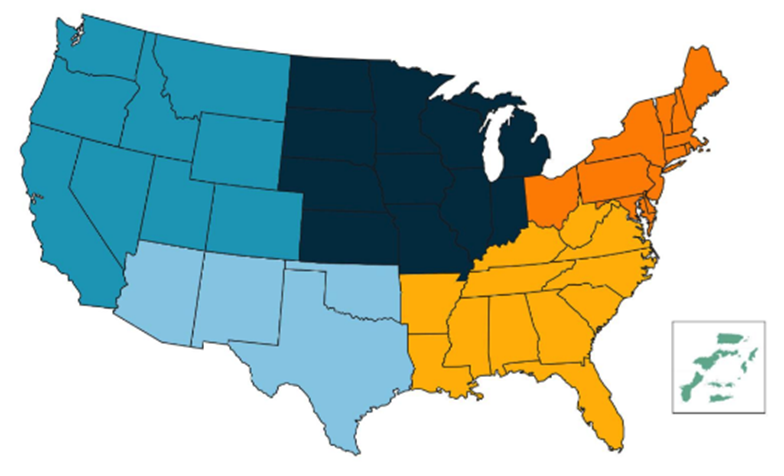
As the United States commemorates its 250th anniversary, communities across the country are illuminating the stories, creativity and remarkable local expertise that define the nation. To strengthen and celebrate that richness, the Smithsonian has launched Regional Collaboratives, a nationwide initiative designed to bring the full breadth of the Smithsonian’s resources into deeper partnership with communities across five regions and U.S. territories.
The Regional Collaboratives are part of ongoing efforts to reach people outside of Washington, D.C., representing a new model for national engagement, one that is rooted in listening and co-creating with communities to address locally identified priorities. The Smithsonian will work alongside local partners to align expertise, collections, research and educational resources to create projects that span from traveling exhibitions, conservation training and research partnerships, to civic education and youth programming.
By connecting museums, K–12 and higher education systems, educators, libraries, tribal nations, community organizations and local leaders, the initiative strengthens existing networks while creating new pathways for collaboration and opportunity.
“Through the Smithsonian’s Regional Collaboratives, we are working with communities—not prescribing solutions—but listening deeply and aligning our resources to the work that matters most to them,” said Monique M. Chism, the Smithsonian’s Under Secretary for Education. “When we show up as partners, not just as a national institution, we help strengthen existing networks and spark new collaborations that can expand opportunity and impact.”
The initiative’s first project launches in Mississippi, where community partners identified a need for expanded access to resources to help protect and preserve local cultural heritage.
The Community Cultural Conservation Workshop Series will bring together a cohort of 30 staff members from small museums and historic sites across Mississippi. Through six virtual sessions and four in-person gatherings over 10 months, participants will receive hands-on training in collections care, preservation, digitization, disaster preparedness and community-centered storytelling. Smithsonian experts and Mississippi-based specialists will teach side by side, ensuring both national expertise and local knowledge inform the process. Each in-person training will include a public program open to the broader community.
The first public event will take place Feb. 27 at Delta State University, hosted by the Smithsonian’s National Museum of African American History and Culture. Following a live blues performance, the museum’s Robert F. Smith Center for the Digitization and Curation of African American History will host a panel discussion, “Baltimore to Buffalo: Preserving Local Histories through Community Curation,” featuring local leaders.
As the workshop series continues across Mississippi, it will connect with complementary Smithsonian programs. In November, the National Folk Festival in Jackson will celebrate Mississippi’s traditions and creativity, providing workshop participants opportunities to engage with the Smithsonian’s Center for Folklife and Cultural Heritage, which is collaborating with the festival.
“So much of our cultural heritage is kept alive by small institutions that don’t always have the resources they need,” said Robby Luckett, director of the Margaret Walker Center at Jackson State University, who has previously collaborated with the Smithsonian. “Working with the Smithsonian helps us not only gain valuable skills but also makes us feel seen and supported. Together, we’re safeguarding Mississippi’s stories so that more people can see themselves in the history of this place.”
Mississippi marks the beginning of a broader national effort as additional Regional Collaboratives’ projects are underway. In the Northeast, the Smithsonian and Historic New England will partner with teachers and students in Massachusetts on a community‑based portraiture project culminating in a student-designed exhibition that elevates youth voices. In Michigan, educators will gather alongside Native scholars, cultural leaders and museum practitioners in connection with the “Americans” exhibition, organized by the Smithsonian’s National Museum of the American Indian and traveled by the Smithsonian Institution Traveling Exhibition Service.
Together, these initiatives signal a new approach to community-centered partnerships that the Smithsonian will continue expanding across the country, honoring local priorities, elevating local expertise and helping communities continue to tell the stories that will shape the next 250 years of the American story.
The Regional Collaboratives are supported by the Smithsonian’s “Our Shared Future: 250,” a Smithsonian-wide initiative supported by private philanthropy and created to commemorate the nation’s 250th anniversary and advance the Smithsonian vision for the next 250 years.
About the Smithsonian
Since its founding in 1846, the Smithsonian Institution has been committed to inspiring generations through knowledge and discovery. It is the world’s largest museum, education and research complex, consisting of 21 museums, the National Zoological Park, education centers, research facilities, cultural centers, libraries and gardens. Two of the 21 museums—the National Museum of the American Latino and the Smithsonian American Women’s History Museum—are in the early planning stages. The total number of objects, works of art and specimens at the Smithsonian is about 157 million. To commemorate America’s 250th anniversary, the Smithsonian is hosting a full slate of special exhibitions, festivals and public events, including the completion of the National Air and Space Museum’s renovation, which opened to the public 50 years ago for the nation’s bicentennial.