
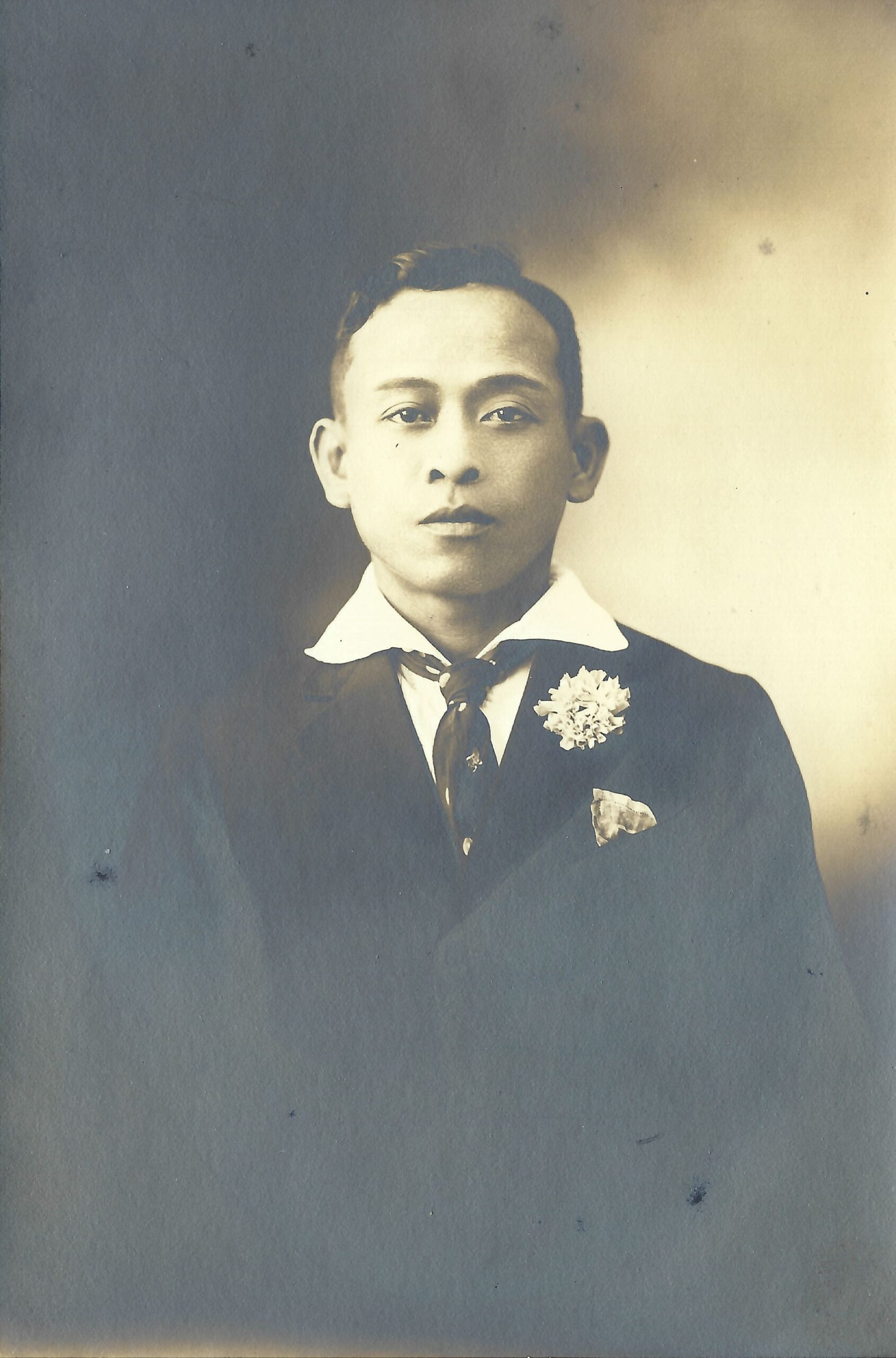
Exhibition Highlights Early Filipino Migration to Hawai‘i and Its Lasting Impact
In recognition of Asian American, Native Hawaiian and Pacific Islander (AANHPI) Heritage Month, the Smithsonian Asian Pacific American Center (APAC), in partnership with the Office of U.S. Sen. Mazie K. Hirono (D-HI), presents “Stories from the Field: Filipino Migrant Workers in Hawai‘i,” a two-week poster exhibition exploring the migration of Filipinos to Hawai‘i in the early 20th century. This marks the third consecutive year of collaboration between APAC and Hirono’s office to present an exhibition in the Russell Rotunda at the Russell Senate Office Building in the Capitol Complex. The exhibition will be on view from Monday, May 11–Friday, May 15, and Monday, May 18–Friday, May 22.
“We are deeply grateful for our ongoing partnership with Senator Hirono,” said Yao-Fen You, APAC’s acting director. “We appreciate the opportunity to share Smithsonian resources that document and celebrate the rich history and culture of AANHPI individuals and communities.”
“I am proud to host this exhibition in collaboration with APAC and help share this history of the Filipino and Filipino American communities in Hawaii,” Hirono said. “Throughout May, as we celebrate our communities’ historic contributions, we also reaffirm our commitment to building a more inclusive and equitable future for all. This exhibition is also meaningful because 2026 marks both our nation’s 250th and the 80th anniversary of the Luce-Celler Act of 1946, which granted Filipino and Indian immigrants the right to naturalize as American citizens. I will continue working to ensure that members of the AANHPI community and all people have the opportunity to live freely, and be treated with dignity and respect.”
In the early 1900s, U.S. immigration policies curtailed the entry of Chinese and Japanese laborers into Hawai‘i, prompting sugar plantation owners to recruit workers from the Philippines, then a U.S. territory. As U.S. nationals, Filipinos migrated more freely and became central to Hawai‘i’s plantation economy, comprising more than half the labor force by 1926. These workers, known as sakadas, played a vital role in shaping the islands’ social and economic landscape.
The exhibition centers on the lives of two sakadas, Eusebio Maglinte and Epimaco Fariola Mansueto, tracing their journeys from the Philippines to Hawai‘i and onward to the continental United States. While many Filipinos established lasting communities in Hawai‘i, others moved on to the West Coast, including Stockton, California, which by the 1940s had become home to the largest Filipino community outside the Philippines.
Their stories continue in APAC’s exhibition, “How Can You Forget Me: Filipino American Stories,” currently on view at the Smithsonian’s National Museum of American History.
“Stories from the Field” was curated by Ethan P. Johanson, who also served as curatorial assistant for APAC’s exhibition “How Can You Forget Me.”
Visiting Information
The Russell Rotunda is located in the Russell Senate Office Building (2 Constitution Ave. N.E.). Visitors should enter through the Delaware Avenue entrance (ADA accessible) at Constitution Avenue N.E. and Delaware Avenue N.E. All visitors must pass through security screening, open weekdays from 7 a.m. to 8 p.m. (or 30 minutes after Senate adjournment).
About the Smithsonian Asian Pacific American Center (APAC)
APAC, established in 1997, ensures the comprehensive representation and inclusion of Asian Americans, Native Hawaiians and Pacific Islanders across the Smithsonian’s collections, research, exhibitions and programs. Through exhibitions, education initiatives and public programs, APAC provides new avenues to document, celebrate and share the rich and diverse history, art and culture of Asian American, Native Hawaiian and Pacific Islander communities. APAC’s current exhibition, “How Can You Forget Me: Filipino American Stories” (on view at the National Museum of American History through Nov. 28, 2027), and its past exhibition, “Sightlines: Chinatown and Beyond,” are paving the way for a dedicated APAC gallery on the National Mall. For more information about the center, visit its website and follow it on Instagram, Facebook and LinkedIn.