
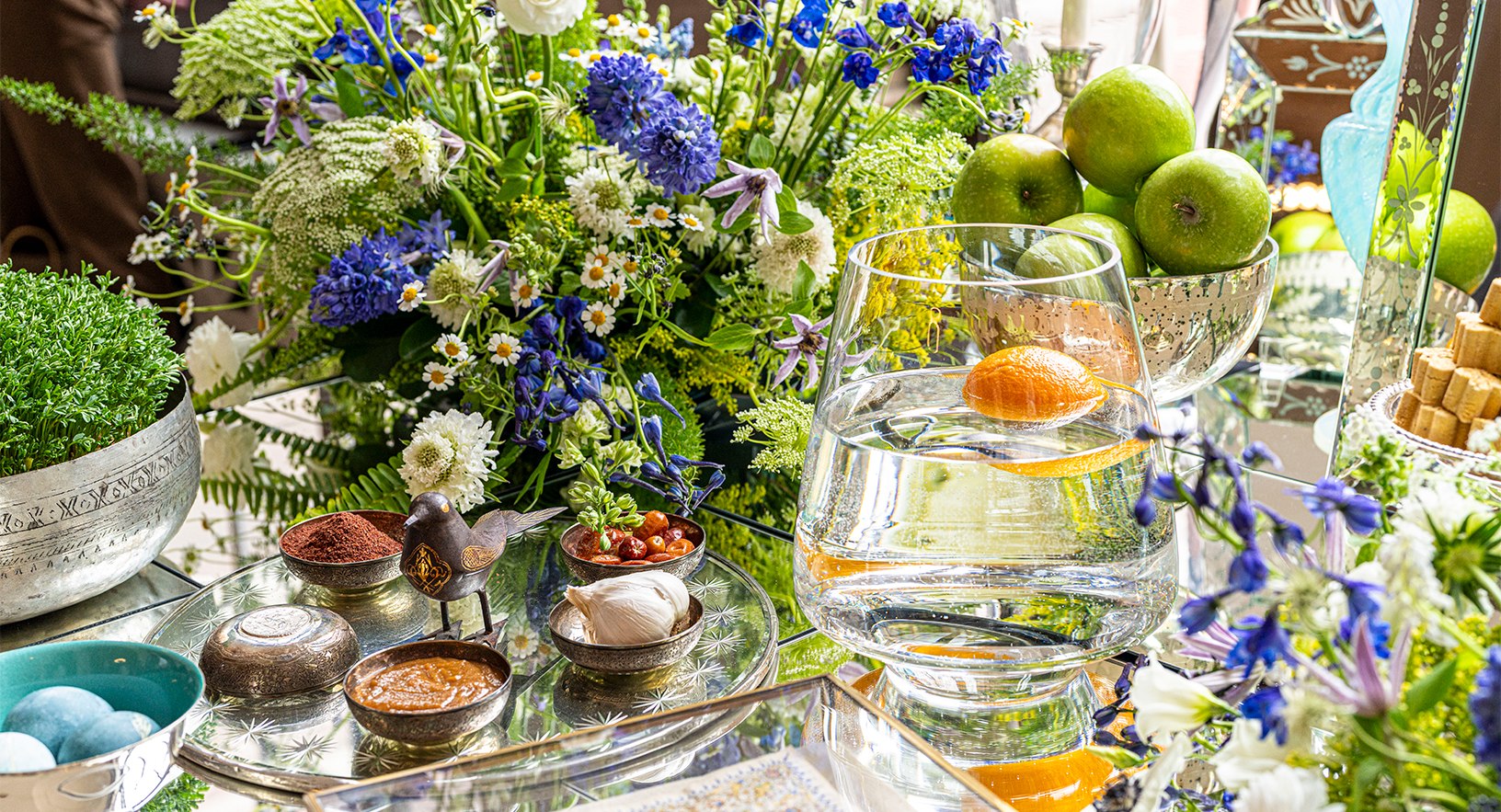
The Smithsonian’s National Museum of Asian Art will celebrate its 2026 Nowruz Family Festival Saturday, March 14, 11 a.m.–4 p.m. The event is free and open to the public. Named for the Persian word for “new day,” Nowruz marks the vernal equinox and the first day of spring.
This year’s Nowruz Family Festival will include attractions for all ages, including storytelling, hands-on activities, food for purchase and more. A traditional haftseen table displaying at least seven (haft) items that refer to new life and renewal, each beginning with the letter “s” (pronounced seen in Persian), will be in the north lobby of the museum’s West Building (Freer Gallery of Art). A full schedule of activities is available online. The museum also offers many digital resources on Nowruz, including arts and crafts activities, podcasts and webinars.
Nowruz is rooted in Zoroastrianism and was celebrated in Iran as early as 3,000 years ago. Today, people in many regions—from West Asia and the Caucasus to Central and South Asia—participate in the 13 days of Nowruz festivities with their own local variations.
More than 6,000 people attended the National Museum of Asian Art’s Nowruz celebration in March 2025.
The museum’s annual Nowruz festival is made possible by the Jahangir and Eleanor Amuzegar Persian Culture Celebrations Fund.
About the Smithsonian’s National Museum of Asian Art
The Smithsonian’s National Museum of Asian Art opened in 1923 as America’s first national art museum and the first Asian art museum in the United States. It now stewards one of the world’s most important collections of Asian art, with works dating from antiquity to the present. The museum also hosts an important collection of 19th- and early 20th-century American art.
Through an ambitious program of collection, conservation, exhibitions, programming and research, the museum serves as a global and national resource for understanding the arts and cultures of Asia and their interaction with America, past and present. By presenting the arts and cultures of Asia in their extraordinary diversity, the museum aims to exemplify foundational ideals of curiosity, creativity and respect. In a world growing ever more interdependent, the museum values cross-cultural understanding as a crucial element of personal and collective well-being.
Located on the National Mall in Washington, D.C., the museum is free and open 364 days a year (closed Dec. 25). The Smithsonian is the world’s largest museum, education and research complex and welcomes millions of visitors yearly. For more information about the National Museum of Asian Art, visit asia.si.edu.