
Archival Materials Preserve a Visual and Cultural Record of Africa for Future Generations
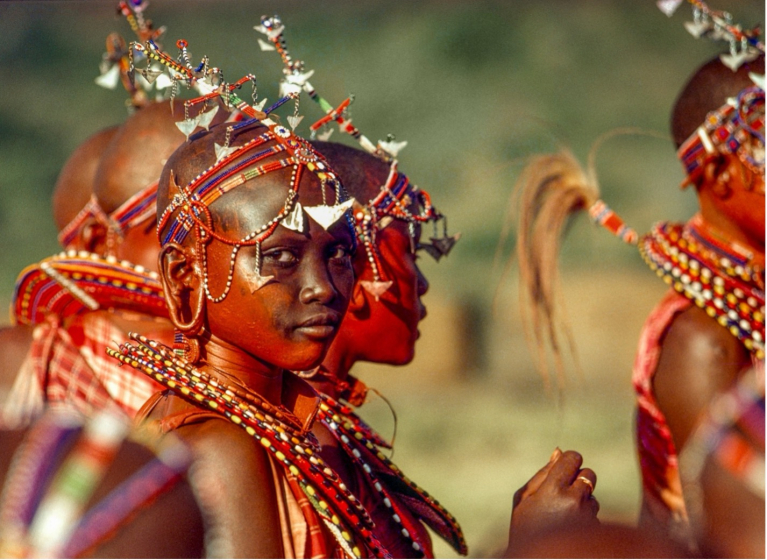
The Smithsonian’s National Museum of African Art has announced a promised gift, the “African Ceremonies” collection, that features archival materials documenting the work of photographers Carol Beckwith and Angela Fisher. Beckwith and Fisher have dedicated their careers to showcasing African cultures and traditions for five decades, from the late 1970s to the present.
“African Ceremonies” features more than 150 cultural groups from 35 African countries. The collection documents cultures and traditions through photographs, journals, films, publications and digital media.
The museum will house the “African Ceremonies” collection as part of its commitment to expanding public understanding of the arts, histories and cultures of Africa and its diasporas. It will increase the African Art Museum’s archival holdings by 28%. In the future, the museum plans to make the collection available for the public to view online, in its archives and on exhibit in its galleries.
The National Museum of African Art is forming an honorary council to support bringing the collection to its archives. The council will include members of the communities represented in these photographs as well as Beckwith, Fisher and Witney Schneidman, former deputy assistant secretary of state for African affairs and museum board member. In keeping with the museum’s mission to make its collections accessible to all, the African Art Museum aims to cultivate relationships with the communities documented in the collection through community engagement, institutional collaborations and intercontinental exchanges.
“This is a transformational gift for our archives,” said John K. Lapiana, director of the National Museum of African Art. “It adds a new dimension to our museum’s encyclopedic collection and allows us to strengthen our connection to communities throughout the continent. The National Museum of African Art’s founding mission is to foster understanding between different cultures and communities, and to increase the public’s understanding of African arts, histories and cultures. We hope that ‘African Ceremonies’ and what we learn from it brings new audiences, from across the nation and the world, to our museum to learn from these important archival materials.”
“Stewarding the ‘African Ceremonies’ collection at the National Museum of African Art strengthens our commitment to engaging the communities and contributors represented in the museum’s collections as we deepen public understanding of Africa’s histories, arts and cultures,” said Greg Adams, head archivist of the museum’s Eliot Elisofon Photographic Archives. “We welcome participation from artists, scholars, cultural practitioners and all those connected to these collections—across the United States, the African continent and its diasporas—to help shape how they are preserved and shared.”
“The ‘African Ceremonies’ archive represents the dedication of more than 50 years of our lives, built on trust, friendship and shared experience,” Beckwith and Fisher said. “To see it enter the National Museum of African Art is profoundly moving for us. Placed alongside the Smithsonian’s existing collection, it becomes part of a continuum of nearly 100 years of cultural documentation. This collaboration ensures that the values, knowledge and extraordinary beauty of African cultures will be carried forward for future generations.”
Throughout their careers, Beckwith and Fisher navigated complex dynamics of consent and reciprocity, working with elders, chiefs and governments to gain permission to photograph ceremonial events, rites and traditions. Today, they are committed to sharing and preserving this collection in a way that honors African perspectives and the principles of shared stewardship.
Event
Beckwith and Fisher will share a 30-minute video/presentation, followed by a 20-minute panel discussion, Q&A and reception:
Fifty Years of “African Ceremonies”: Sharing and Preserving an Iconic Photography Collection
National Museum of African Art’s Lecture Hall
950 Independence Ave. S.W.
Thursday, April 23; 11:30 a.m.–1 p.m.
About the Eliot Elisofon Photographic Archives
The museum’s Eliot Elisofon Photographic Archives (EEPA) is world-renowned, housing more than 600,000 items, including rare glass-plate negatives, lantern slides, stereographs, postcards, maps and engravings. The famed Life magazine photographer Eliot Elisofon’s association with the National Museum of African Art began as a founding trustee in 1964. Upon his death in 1973, he donated his African-related materials to the museum, including more than 50,000 black-and-white negatives and photographs, 30,000 color slides and 120,000 feet of motion picture film and sound materials.
Since 1973, the archives have grown to include more than 180,000 slides and color transparencies and 80,000 black-and-white photographs. The collections in the EEPA reflect the cultural, ecological and historical diversity of the African continent, documenting everything from ceremonial life to architecture, agriculture and fashion. The Eliot Elisofon Photographic Archives offers in-person appointments to view materials as well as finding aids and digitized content on the Smithsonian Online Virtual Archives.
About the National Museum of African Art
The Smithsonian’s National Museum of African Art is the only national museum in the United States dedicated to the collection, conservation, study and exhibition of Africa’s arts across time and media. The museum’s collection of nearly 13,000 artworks spans more than 1,000 years of African history and includes a variety of media from across the continent.
Beginning as a private educational institution in Washington, D.C., in 1964 to promote cross-cultural understanding, the museum celebrated its 60th anniversary in 2024. Founded by Warren M. Robbins, a former U.S. Foreign Service officer, the museum opened with Robbins’ personal collection in a Capitol Hill townhouse that had once been the home of Frederick Douglass. Robbins was inspired by the Civil Rights Movement and motivated by a desire to share how African art inspired Western art. The museum joined the Smithsonian Institution in 1979 and has continued to expand its vision and collection for six decades.