
Largest Hirshhorn Campus Renovation Since 1974 Restores Historic Passage, Expands Access and Nearly Doubles Outdoor Art Display
The Smithsonian’s Hirshhorn Museum will reopen its revitalized 1.3-acre Sculpture Garden Saturday, Oct. 31, following a four-year transformation led by artist-architect Hiroshi Sugimoto. The largest renovation of the Hirshhorn campus since the museum opened in 1974, the project restores the long-closed underground passage connecting the museum and garden, expands entrances from two to five and increases the number of artworks on view across the campus from 35 to nearly 60.
Designed to improve accessibility and create new opportunities for art, performance and public programs, the revitalized garden reconnects the museum’s outdoor galleries with the National Mall while preserving defining elements of architect Gordon Bunshaft’s original vision. The project introduces new spaces for monumental commissions and rotating exhibitions while strengthening connections between the garden, museum plaza and surrounding public landscape.
First announced in 2019, the revitalization responds to the Hirshhorn’s commitment to caring for the national collection and making it accessible to the broadest possible audience. Sugimoto’s design preserves key historical features while preparing the garden to accommodate more visitors, artworks and programming for decades to come.
“The Sculpture Garden is an essential part of the Hirshhorn’s identity and its presence on the National Mall,” said Aaron Seeto, acting director of the Hirshhorn Museum and Sculpture Garden. “The revitalization reflects our responsibility for the national collection while making it more accessible to the millions of people who visit the Mall each year. Hiroshi Sugimoto’s thoughtful design honors our mission while creating opportunities for visitors to encounter art in new ways. The garden is designed for the 21st century, offering a dynamic setting for art and public programming that can continue to evolve with our collection and audiences.”
Key features of the revitalized Sculpture Garden include:
- Expanded public access: Five at-grade entrances, increased from two, including accessible ramps and a restored 60-foot-wide entrance from the National Mall, creating stronger connections across the Hirshhorn campus. New overlooks and expanded seating invite visitors to encounter art throughout the garden and along its edges.
- More of the national collection on view outside: Nearly 60 artworks, including 21 from the garden’s original 1974 installation, bring foundational works from Joseph H. Hirshhorn’s collection into dialogue with recent acquisitions, gifts, loans and commissions by leading contemporary artists.
- New spaces for art and performance: A flexible West Lawn Gallery accommodates monumental commissions and rotating exhibitions, while new outdoor galleries and a redesigned reflecting pool create opportunities for performances, talks and public programs.
- Preservation of the garden’s architectural legacy: Sugimoto’s redesign restores key elements of Bunshaft’s original vision, including the north entrance and underground passage, while introducing new stonework, pathways and gathering spaces that prepare the site for future generations.
Architecture and Landscape
Sugimoto’s redesign builds on the garden’s architectural history while improving accessibility, expanding spaces for art and strengthening connections to the National Mall. Originally designed by Bunshaft of Skidmore, Owings & Merrill in 1974 and modified by landscape architect Lester Collins in 1981, the garden has now undergone its most comprehensive transformation in more than five decades.
New hand-stacked stone walls—made from 950 tons of rocks sourced in Massachusetts—establish intimate outdoor galleries, particularly in the East Garden, complementing Bunshaft’s original concrete architecture. The project also restores the garden’s original 60-foot-wide entrance from the National Mall, while new pathways, ramps and seating improve circulation and accessibility throughout the site.
The redesigned landscape introduces 57 new trees and approximately 30,000 plants, largely native species. Developed to increase shade, provide year-round seasonal interest and support the display of sculpture, the planting design also preserves historic elm trees at the East and West Overlooks.
At the center of the garden, Sugimoto has expanded the historic reflecting pool and introduced a stage inspired by traditional Japanese Noh theater, with built-in seating for performances and public programs. The project also reopens the underground passage beneath Jefferson Drive, closed since the 1980s. Reimagined as Sugimoto’s “Passage of Reflectance” (2026), it features sweeping walls of polished stainless steel that create shifting reflections of light and visitors while restoring a direct connection between the garden and museum plaza.
Sugimoto’s New Material Research Laboratory, cofounded with Tomoyuki Sakakida, led the design in association with YUN Architecture. Quinn Evans served as architect of record, and Grunley Construction as general contractor. The landscape was designed by Sugimoto and developed in collaboration with Eiko Tomura Landscape Architects. Rhodeside & Harwell Landscape Architecture served as the associate landscape designer and licensed landscape architect responsible for the local adaptation and implementation. The Sculpture Garden will be maintained by Smithsonian Gardens.
New Overlooks and Expanded Opportunities for Art
New overlooks along the north, east and west edges of the garden bring contemporary sculpture directly into the path of visitors to the National Mall, creating options to encounter art before entering the garden itself. The overlooks also provide new views into the sunken landscape and connect the museum’s outdoor galleries to the surrounding public space.
The North Overlook features Elmgreen & Dragset’s monumental “Eight” (2026), a 28-foot-tall sculpture that upends the familiar form of a swimming pool. The work is the artists’ first to enter the Hirshhorn’s collection and their first museum commission on the East Coast. On the East Overlook are works by Chatchai Puipia and Woody De Othello, while the West Overlook features sculptures by Huma Bhabha and KAWS.
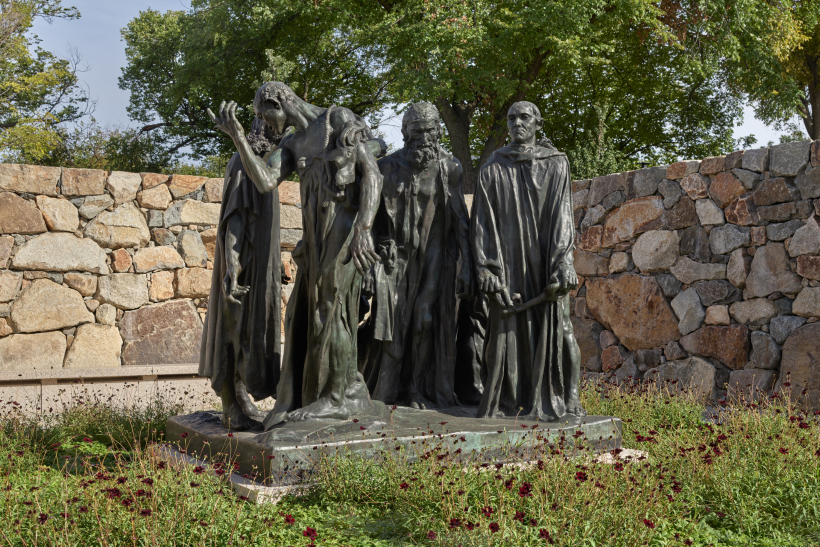
Within the garden, the new arrangement brings together major works from the Hirshhorn’s renowned Modernist holdings with contemporary sculpture. The East Garden traces developments in modern sculpture through works by Auguste Rodin, Henri Matisse, Henry Moore, Barbara Hepworth, Alberto Giacometti and Pablo Picasso, among others. Connecting the East and West Gardens, a new allée places two works by Theaster Gates in dialogue with Richard Hunt’s “Large Hybrid” (1971), highlighting connections across generations of artists.
The West Garden introduces works by contemporary artists, including Raven Halfmoon, Lauren Halsey, Izumi Kato, Jeff Koons and Liz Larner. Its new West Lawn Gallery provides a dedicated setting for monumental installations and rotating commissions, beginning with “Yoshitomo Nara: Sentinels of Stillness,” on view Oct. 31, 2026–Nov. 7, 2027. Featuring three new monumental works by Nara, the inaugural exhibition establishes the West Lawn as a platform for ongoing artistic experimentation.
Together, the revitalized garden and the expanding collection strengthen the Hirshhorn’s role as a national platform for modern and contemporary art, providing new ways for visitors and artists to engage with sculpture, architecture and performance on the National Mall.
About the Hirshhorn Sculpture Garden
Opened in 1974, the Hirshhorn Museum and Sculpture Garden was designed by Gordon Bunshaft, of Skidmore, Owings & Merrill, to display Joseph H. Hirshhorn’s gift to the nation. Bunshaft’s design for the sculpture garden was a spare, Modernist landscape, largely devoid of shade, recalling the traditional Zen gardens he had experienced in Japan in 1960. While elegant, the space could be difficult to access. Interventions were made within a decade by landscape architect Lester Collins, who introduced shade, seating, greenery and a ramp. By 2016, the Sculpture Garden required infrastructure improvements as well as more space to share the collection and accommodate global artists and audiences in the 21st century. In 2022, following a public consultation process, Hiroshi Sugimoto’s proposal was approved by the Commission of Fine Arts and the National Capital Planning Commission. The Sculpture Garden closed for renovation in 2023 and is reopening Oct. 31, 2026, with an expanded entrance on the National Mall and a refreshed passageway reconnecting the museum building and plaza for the enlarged presentation of modern and contemporary art to the broadest possible audiences.
About the Hirshhorn
The Hirshhorn Museum and Sculpture Garden is the national museum of modern and contemporary art and a leading voice for 21st-century art and culture. Part of the Smithsonian, the Hirshhorn is located prominently on the National Mall in Washington, D.C. Its holdings encompass one of the most important collections of postwar American and European art in the world. The Hirshhorn presents diverse exhibitions and offers an array of public programs on the art of our time—free to all. The Hirshhorn Museum is open Mondays noon–5:30 p.m. and Tuesdays–Sundays 10 a.m.–5:30 p.m. (closed Dec. 25).