
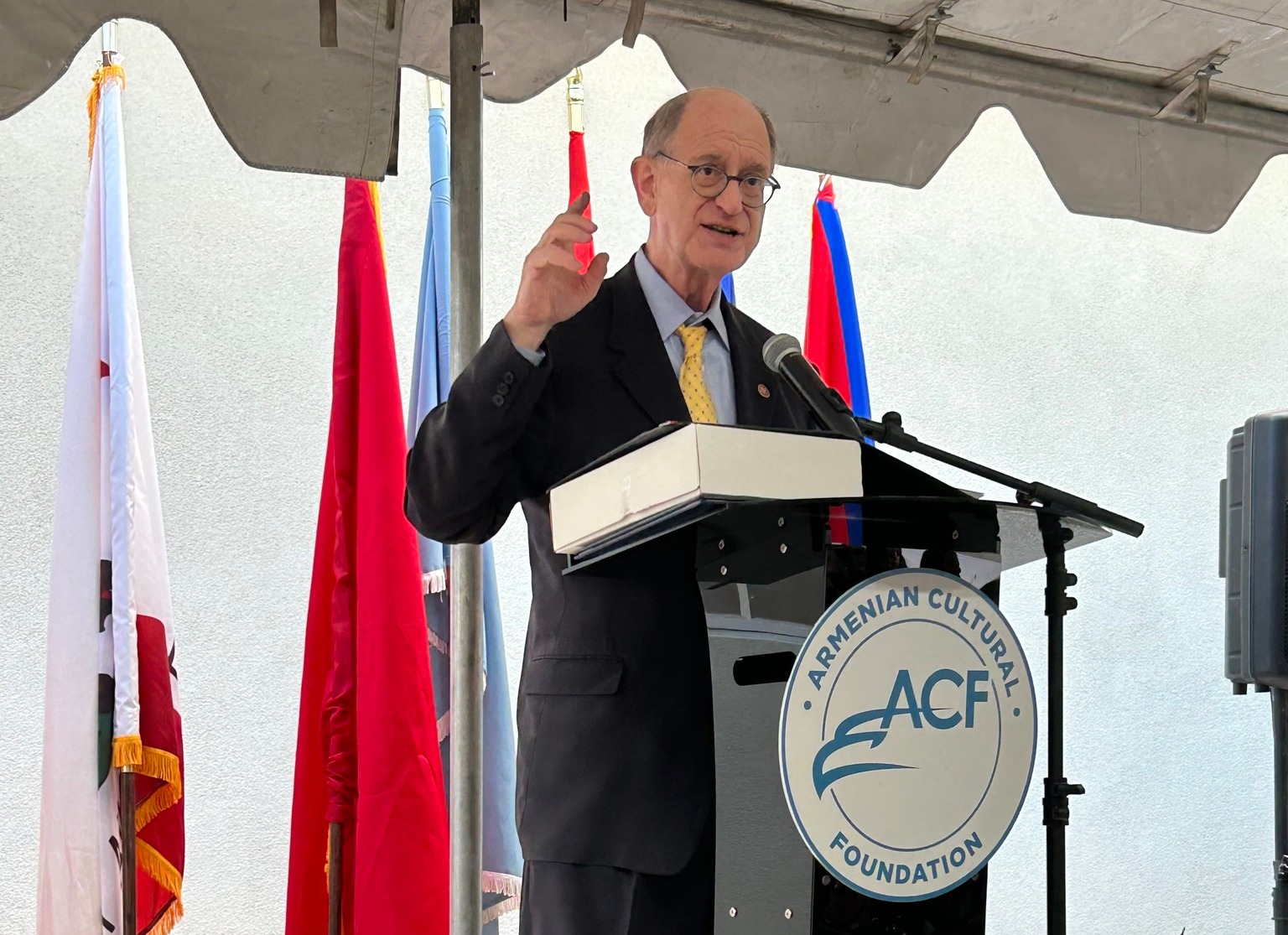
WASHINGTON, D.C. — Last night, the bipartisan 21st Century ROAD to Housing Act officially became law despite President Donald Trump’s refusal to sign it, delivering long-overdue reforms to address America’s housing crisis and enacting Congressman Brad Sherman’s (CA-32) Housing Unhoused Disabled Veterans Act (HUDVA). Under the Constitution, the legislation became law without the President’s signature after he declined to act on it.
The landmark legislation passed Congress with overwhelming bipartisan support and includes Sherman’s HUDVA, which authorizes the Department of Housing and Urban Development (HUD) to use vouchers under the Housing Choice Voucher Program to provide housing assistance for disabled veterans experiencing homelessness.
“Today is a victory for homeless veterans and for every American struggling to find affordable housing,” said Congressman Sherman. “President Trump tried to hold this bill hostage in a misguided effort to force Congress to accept his unrelated political demands. Fortunately, the Constitution prevented one man’s political tantrum from stopping legislation that will improve millions of lives.”
“This law includes my Housing Unhoused Disabled Veterans Act, which will help ensure that disabled veterans who sacrificed for our country are not forced to sleep on our streets. No veteran who served our nation should ever be left without a safe place to call home.”
Sherman had sharply criticized Trump’s earlier decision to withhold his signature from the bill, arguing that the President was using desperately needed housing reforms—and assistance for homeless veterans—as leverage to pressure Congress into passing unrelated election legislation. Trump ultimately allowed the bill to become law without his signature after continuing to refuse to endorse it.
The 21st Century ROAD to Housing Act represents the most significant federal housing legislation in decades. In addition to Sherman’s HUDVA provision, the law expands the nation’s housing supply, cuts red tape that drives up construction costs, modernizes federal housing programs, and includes measures to improve affordability for families across the country.
“We still have much more work to do to make housing affordable and end veteran homelessness,” Sherman added. “But today, Congress proved that bipartisan solutions are still possible—and that no President should be allowed to derail good legislation for unrelated political purposes.”