

Since the COVID-19 pandemic first upended our lives in 2020, the concept of the hybrid workspace has evolved.
At California State University, Northridge, a team of students and faculty have begun gathering data and using scientific analysis to show how several factors, such as lighting, furniture layout, and air ventilation, can impact and lay the groundwork to serve as a model for future hybrid workspaces.
Over the past year, CSUN’s Autonomy Research Center for STEAHM (ARCS) and the Los Angeles Department of Water & Power (LADWP) have developed a collaborative, three-phase research project called CONNECT (Collaborative Office Network for Navigating Empowerment, Creativity, and Transformation). The project examines how workplace design influences employee well-being, collaboration, and productivity.
“We are looking at what factors create the ideal working environment where employees are best suited to increase productivity and connect with each other” said Nasrin Golshany, assistant professor of Family and Consumer Sciences, part of the College of Health and Human Development. “This includes having a multi-sensory environment that involves a combination of different variables, such as having access to an adequate amount of light, good acoustical conditions, and office layout.”
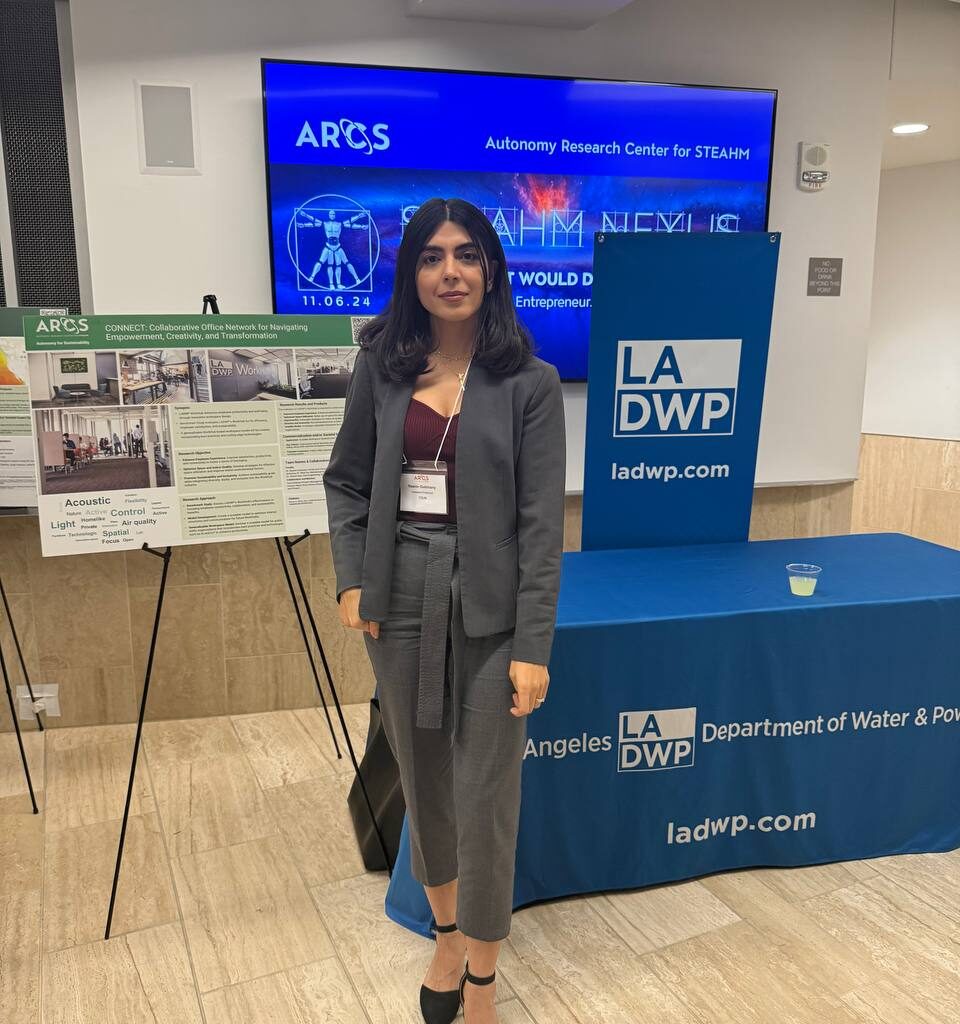
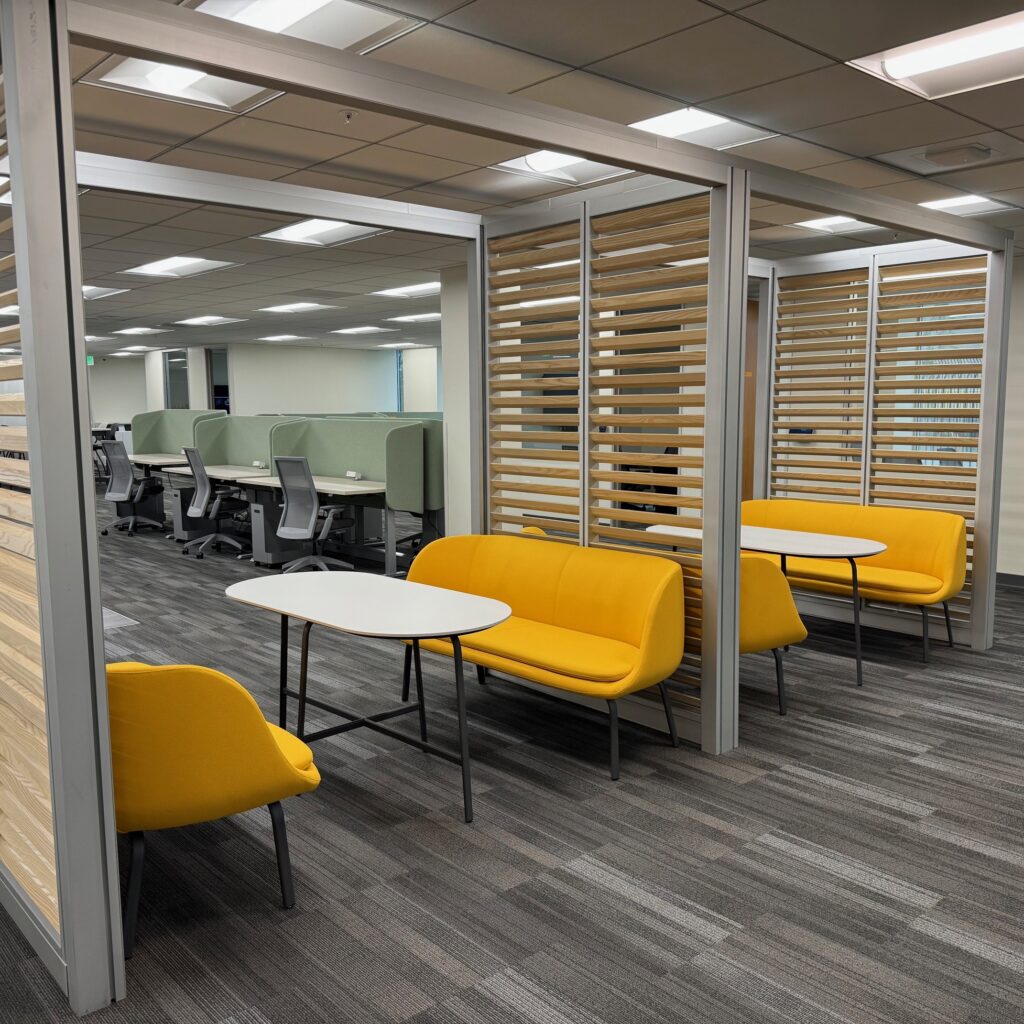
As part of the first phase of the project, three students completed a four-week comprehensive evaluation of the LADWP’s WorkHub, an innovative workspace at its downtown headquarters designed to enhance employee productivity.
The students assessed workers stationed at LADWP’s traditional office space and the WorkHub to learn how these spaces can enhance employee connectivity and reduce silos. Research methods included self-reported surveys, observational studies, sensory feedback, and data analytics to measure employee satisfaction, productivity, collaboration, and comfort. Data collected focused on various metrics, including indoor environmental quality (IEQ) factors and sustainability benefits such as reduced commuting and lower emissions.
One of the biggest findings from the first phase of the study is how strongly workplace features such as layout design and lighting shape employee productivity, Golshany said.
When lighting, acoustics, air quality, layout, and biophilia are designed to work together as a cohesive system, the environment becomes far more supportive of performance. Flexible spaces that offer personal control and access to daylight, views, and natural elements consistently enhance focus, comfort, and collaboration,” she said. “This case study could be really helpful in developing evidence-based design strategies that can be impactful in designing other work hubs and hybrid spaces that many employees are seeking.”
A noteworthy finding in survey results, Golshany added, were the distinct types of work environments employees sought based on where their workspace was located.
“One of the main questions we asked employees was to see what type of environment they think is more impactful in their overall performance and satisfaction,” she said. “Interestingly, we noticed that employees at the WorkHub, listed technology as the most impactful element in their work environment and those using the traditional offices said the aesthetic or basically the visual appearance of their office spaces is the most impactful variable in terms of like their performance.”
Golshay explained that the team is considering two major technology integrations as the study prepares for its next phase.
“First, the use of virtual and augmented reality is being discussed as a way to create shared social spaces that allow employees working from home, individual offices, or the WorkHub to join interactive gatherings and stay connected,” she said. “Second, the team is exploring the development of a digital twin model that could simulate and predict optimal indoor environmental conditions, including lighting, acoustics, and thermal comfort, to support healthier and more efficient workspace performance.
The study has also provided an opportunity for CSUN students to gain valuable research experience that will have a real-world impact, said Poojitha Gidugu, a second-year graduate student.
“Working on the LADWP collaborative research project has been an incredible learning experience,” Gidugu said. “It allowed me to apply my public health and data analysis skills to real-world issues while working alongside a passionate and supportive research team. I truly value the opportunity to contribute to a project that promotes sustainability and community well-being in Los Angeles.”
While there are two more phases of the study to be completed, the results so far have been promising in providing a workplace model for future hybrid settings.
“This study focused on the built environment related to the human aspect of interior spaces such as natural light versus artificial light, natural ventilation versus mechanical, open workspaces versus collaborative spaces, etc.,” LADWP wrote in a statement. “In conclusion, the CSUN team presented beneficial and informative data that will be utilized to assist our architectural team to develop a more invigorating, collaborative, and engaging spaces to work.”