
His Majesty King Charles III and Her Majesty Queen Camilla today visited London Zoo to celebrate the 200th anniversary of ZSL, marking two centuries of pioneering science, conservation and animal care.
The event marked His Majesty’s first official visit to London Zoo as Patron of ZSL, a role he inherited from his mother, Her late Majesty Queen Elizabeth II. Since 1830, the reigning monarch has served as Patron of ZSL, underscoring a relationship between ZSL and the Crown that spans almost the entirety of our history.
It was also Her Majesty The Queen’s first official visit to London Zoo.
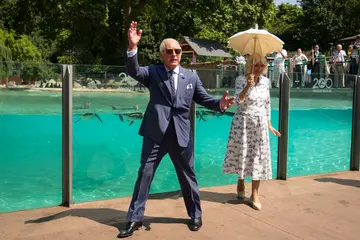
During the visit, Their Majesties toured our world-famous conservation zoo, learning more about our work to restore wildlife in the UK and around the world, remarkable heritage and our ambition for the future as we enter into our third century.
A Royal celebration for Darwin’s tortoises
At our Giants of the Galápagos habitat, Their Majesties joined zookeepers Dan Kane and Unnar Aevarsson to present Polly the tortoise with a carved watermelon “cake” – emblazoned with our 200th anniversary logo and filled to the brim with her favourite snack of flowers and plants.
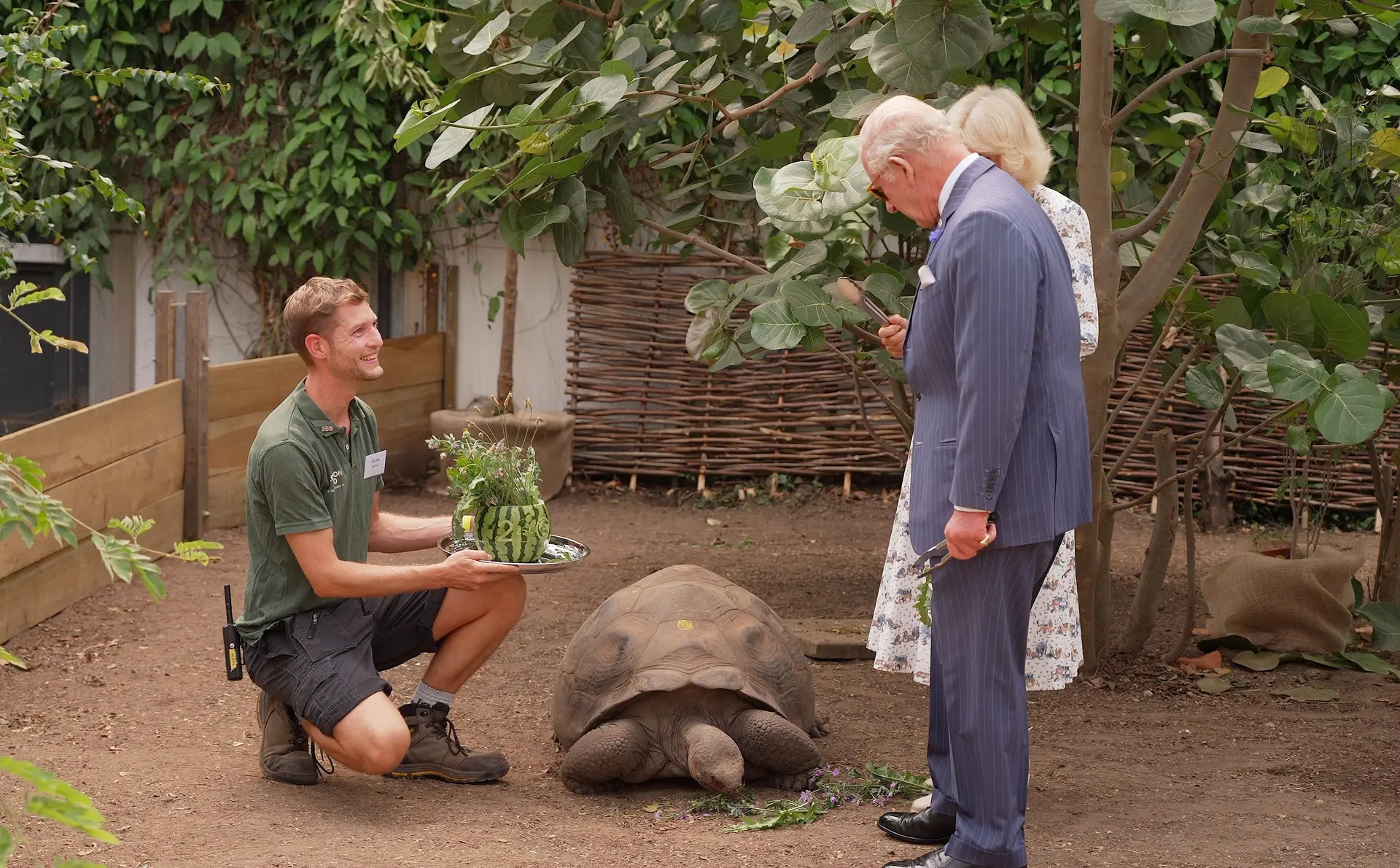
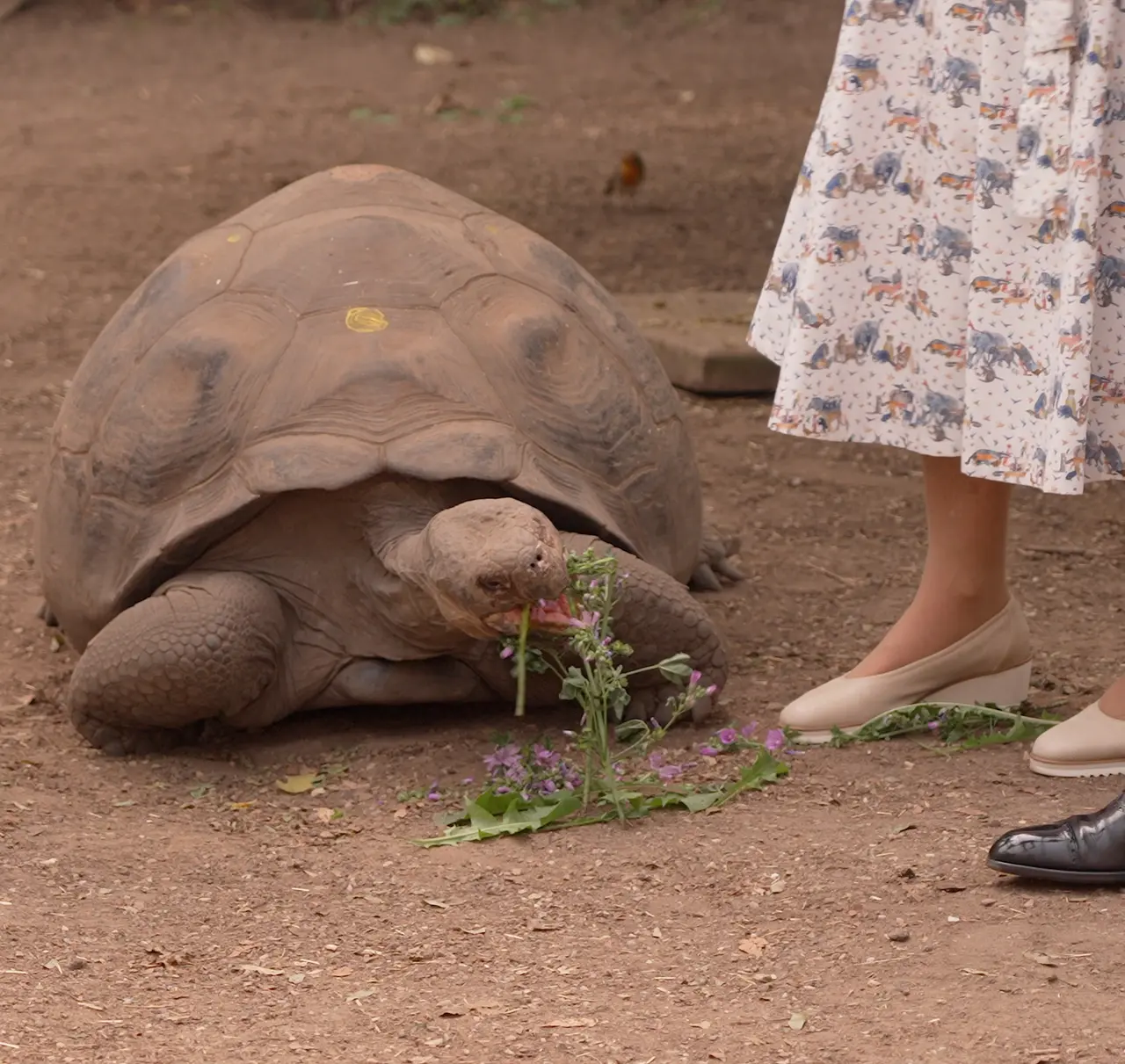
The Galápagos Islands are among the most important locations in the history of evolutionary science, having helped shape Charles Darwin’s understanding of how species adapt and change over time. Darwin was a Fellow of ZSL and regularly wrote to the Society about his observations, and our Library today holds a first edition of On the Origin of Species.
London Zoo’s tortoises are all in their early thirties – still relative youngsters for a species that can live for well over a century. This trio could well still be around when ZSL celebrates its 300th anniversary in 2126!
Shaping the future of wildlife health
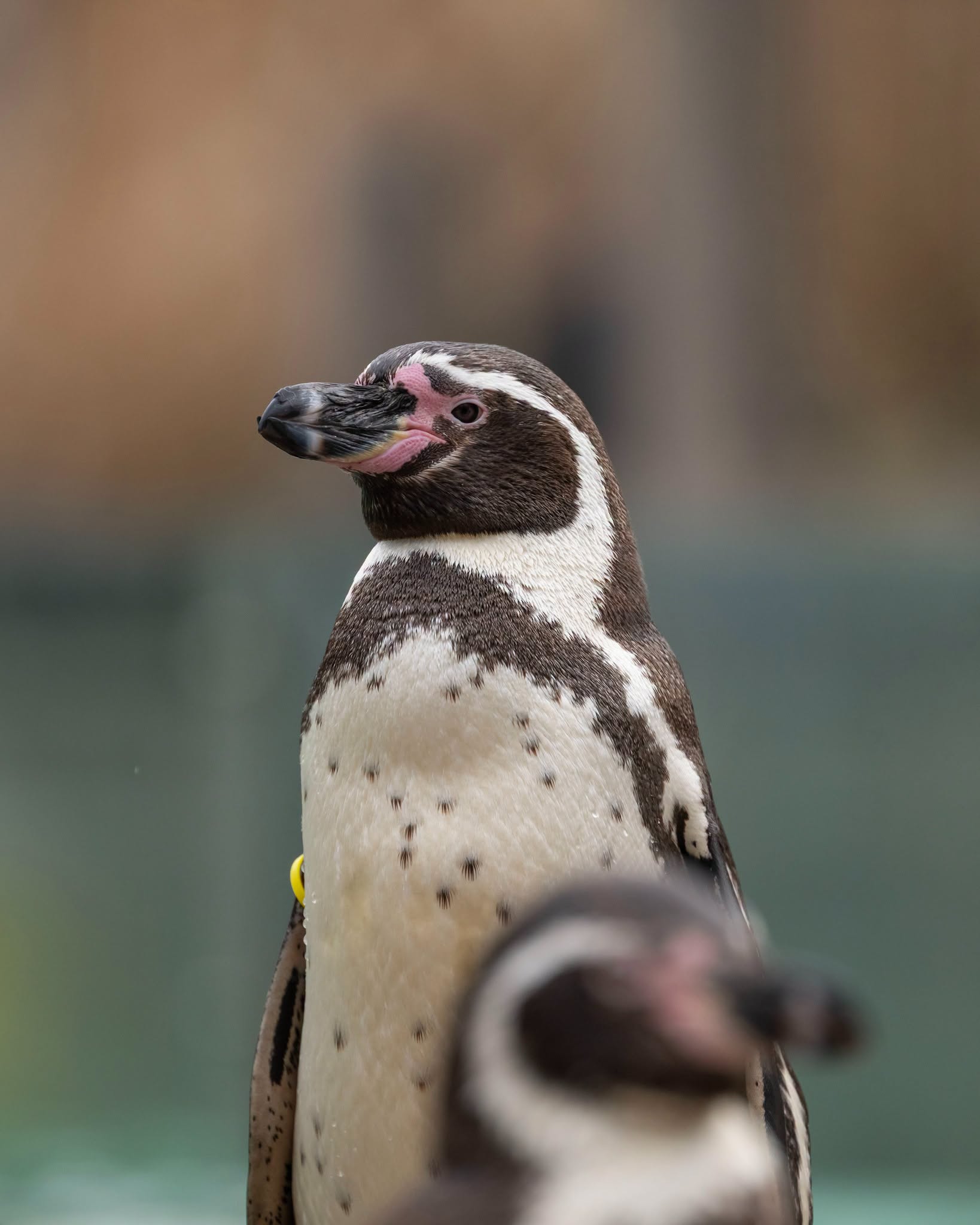
At Penguin Beach, Their Majesties observed a penguin health check carried out by vet Stefan Saverimuttu, and Head of Birds Jessica Fryer, and heard about ZSL’s ambitious plans for a new wildlife health centre, announced to mark our anniversary.
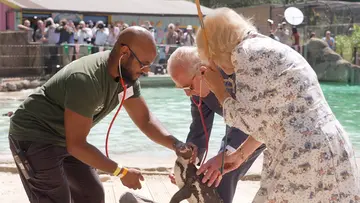
The centre, which will include a new veterinary hospital, will build on a heritage that stretches back almost as far as ZSL itself. In 1829, ZSL employed the world’s first zoo veterinarian and later established Europe’s first purpose-built zoo veterinary hospital, helping set standards for animal care that continue to influence conservation organisations worldwide.
Today, that legacy has evolved into a globally significant wildlife health programme. ZSL vets and scientists investigate diseases affecting wild animals and those in human care, train wildlife veterinarians in the UK and overseas, track how diseases spread between species and support conservation projects around the globe.
Our work includes studying threats such as chytrid fungus, which has devastated amphibian populations worldwide, and bovine tuberculosis, helping improve understanding of how diseases move between wildlife and livestock.
The new wildlife health centre reflects the urgent need for greater monitoring and understanding of diseases affecting wild animals, which remain poorly understood despite posing serious risks to both biodiversity and people. The plans are outlined in our recent report, Protecting Nature’s Balance.
Penguins take centre stage
Their Majesties took part in one of our innovative animal training sessions, using a laser pointer to encourage the Humboldt penguins to dive and swoop under the water.
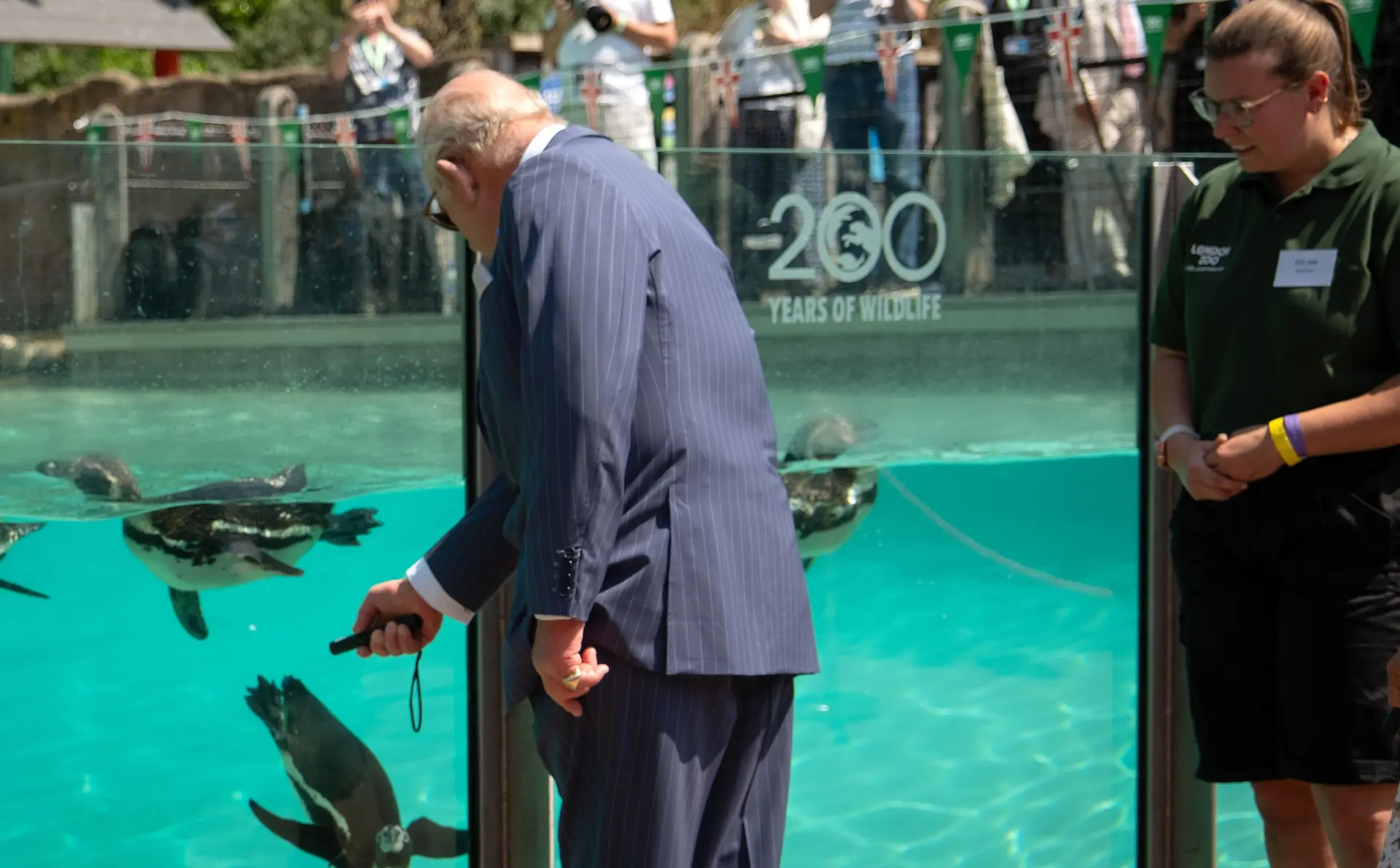
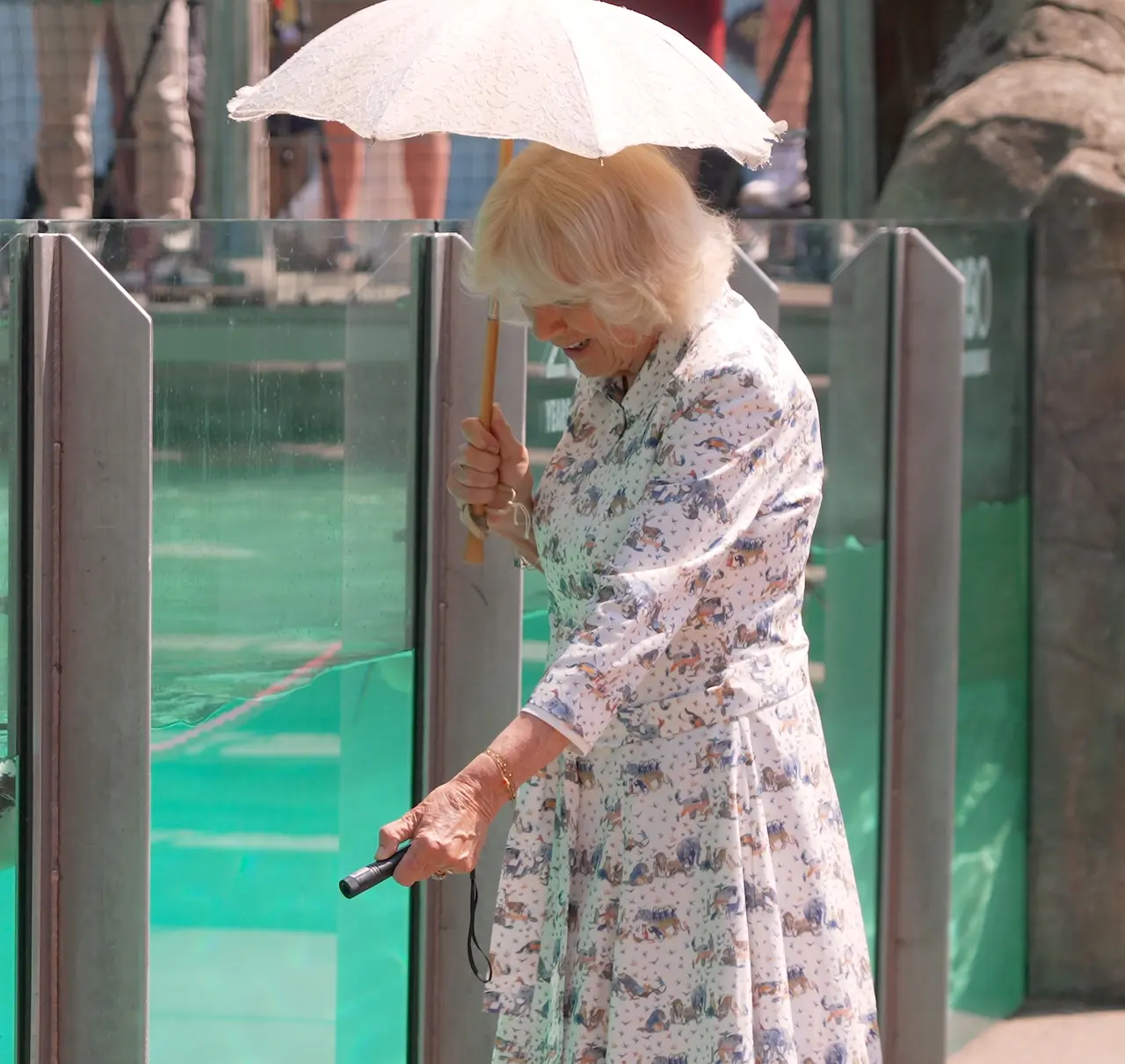
The birds enthusiastically chased the moving point of light, which mimics the glint of fish scales and encourages swimming, diving and agile movement. This allows our zookeepers to monitor individual animals, and Their Majesties saw how our training supports animal healthcare across London Zoo.
From primates voluntarily opening their mouths for health checks to tigers presenting their tails for injections, our keepers and vet nurses work closely with our animals to make routine checks as stress-free as possible.
Celebrating 200 years of history and influence
Next up was a visit to ZSL’s anniversary heritage exhibition; a celebration of ZSL’s history, and reminder that our influence extends beyond conservation science to, shaping culture, inspiring curiosity and helping millions of people connect with wildlife.
The Queen met students Skye and Paulo at our popular statue of Lieutenant Harry Colebourn and his beloved bear, Winnie. Winnie came into the care of London Zoo in World War I and went on to inspire the stories of Winnie-the-Pooh, creating a cultural legacy that continues to delight generations around the globe.

The students, who were visiting London Zoo as part of our Education Access Scheme, presented The Queen with an exclusive early print of Winnie-the-Pooh: A Little Boy and His Bear by author Jane Riordan, a new story collection to celebrate the 100th anniversary of Winnie the Pooh.
Tiny creatures, global impact
The final stop on the tour saw Their Majesties explore the small creatures, with a big impact.

At Tiny Giants, Dave Clarke, our curatorial lead took The Queen to visit our colony of Western honeybees – and pointed out our very own Queen! While Senior Curator, Paul Pearce Kelly showcased one of our most remarkable conservation success stories to The King.
His Majesty met our invertebrate expert Sam Aberdeen inside the breeding room for our Partula tree snails, and helped prepare two individuals for their wild release to French Polynesia later this year.
These snails represent the latest chapter in a four-decades long conservation programme that has helped to save an entire group of species from extinction.
Native Partula tree snails were driven to the brink of disappearance after the predatory rosy wolf snail was introduced to French Polynesia in an attempt to control another invasive species. Instead, the predator devastated native Partula populations, with many species becoming extinct in the wild by the 1990s.
In response, ZSL led an emergency rescue effort, collecting the last surviving individuals before they vanished entirely. Working with international partners, we established a long-term breeding programme and coordinated a global network of conservation organisations to safeguard genetic diversity and rebuild populations.
Today, those efforts are yielding remarkable results, with thousands of snails reintroduced to their native forests.
Before release, conservationists mark individual Partula snails with tiny, coloured dots of UV reflective paint, enabling scientists to identify and monitor the reintroduced animals once they are in the wild. This year’s cohort will be marked with orange dots, with the two Partula Rosea snails painted by His Majesty getting an extra Royal purple spot, ahead of their autumn release.
A spotlight on the people behind conservation
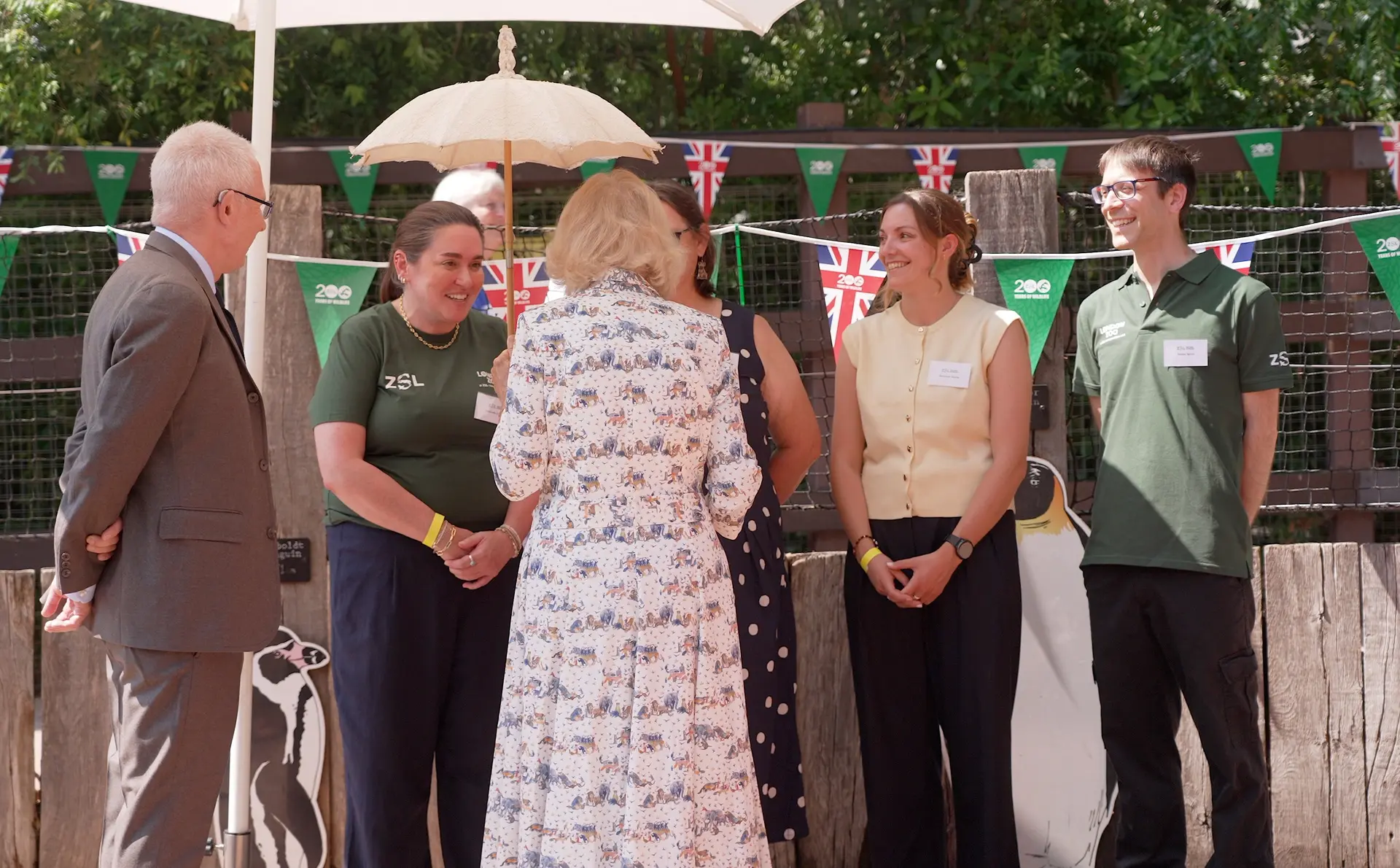
Throughout the visit, Their Majesties met the people whose expertise makes ZSL’s work possible – from our zookeepers and vets to scientists, educators and conservationists working in the UK and across the world.
Their visit shone a spotlight on the extraordinary breadth of our work: protecting species from extinction, advancing wildlife health science, caring for animals, conducting pioneering research and inspiring future generations to value and protect nature.
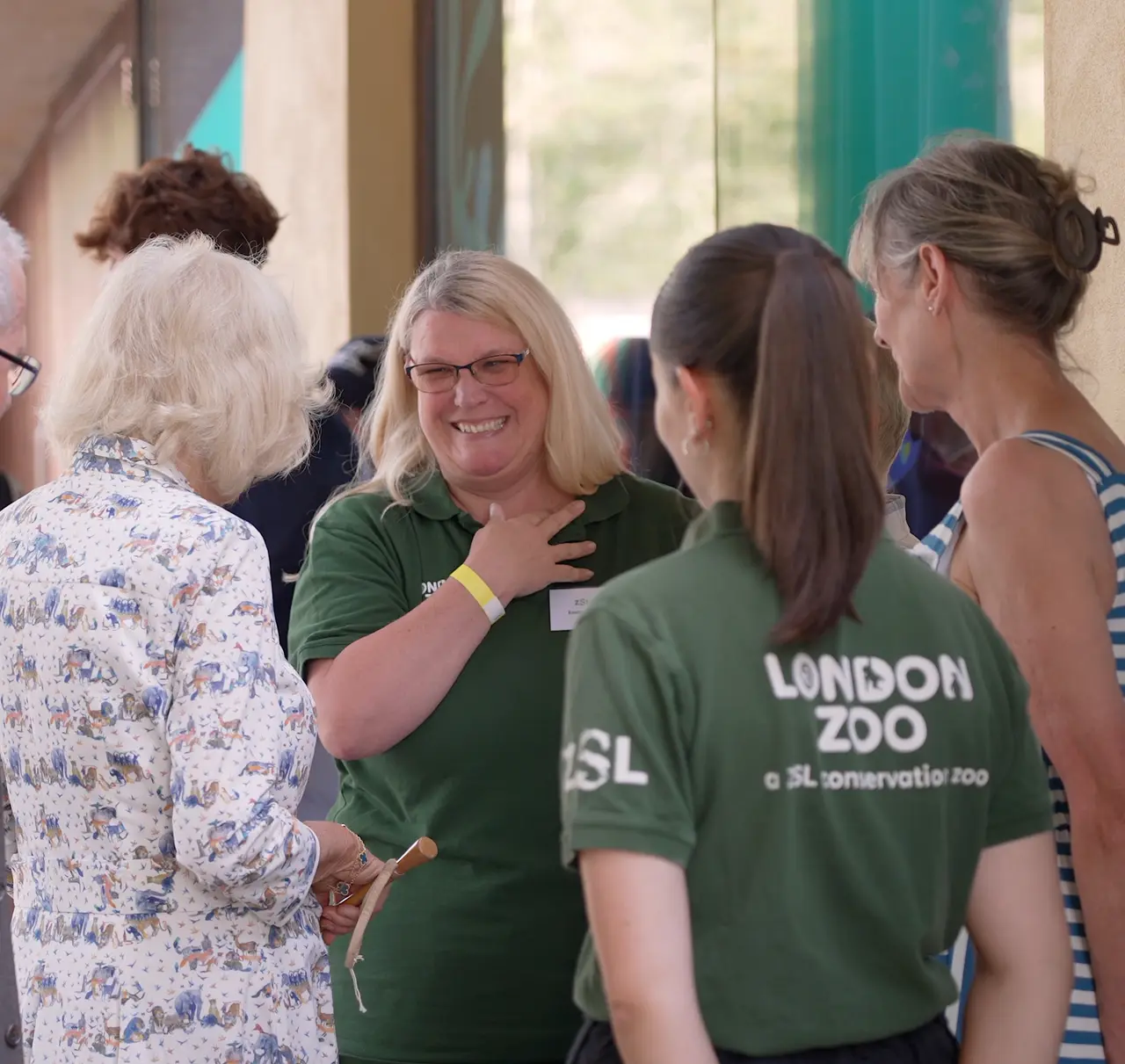
As we celebrate our 200th anniversary, this special visit from The King and Queen provided a powerful reminder of our global conservation impact and our continuing commitment to creating a world where wildlife thrives.
You too can make a difference to wildlife with a visit to London Zoo – every visitor helps to support our vital work.