
Bears Are Currently Off-Exhibit, Will Debut Spring 2026
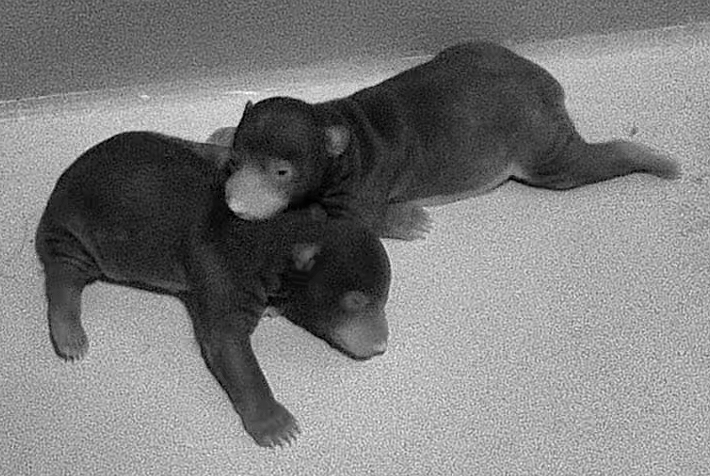
For the first time since 2013, keepers at the Smithsonian’s National Zoo and Conservation Biology Institute (NZCBI) have welcomed two sloth bear cubs. The cubs were born Dec. 7 at approximately 2:30 and 4:30 a.m., respectively, in an off-exhibit den in the Zoo’s Asia Trail exhibit.
The sex of each cub has not been determined, and the cubs have not yet been named.
NZCBI is one of only 15 Association of Zoos and Aquariums (AZA)-accredited zoos that house sloth bears, which are listed as vulnerable to extinction by the International Union for Conservation of Nature. With just 42 sloth bears in the AZA population, the births represent a milestone for the long-term sustainability of this rare species.
“The birth of two sloth bear cubs at Smithsonian’s National Zoo is a significant achievement for the AZA’s Species Survival Plan,” said Asia Trail curator Michael Brown-Palsgrove. “These cubs strengthen the genetic diversity and sustainability of the managed population while also supporting global conservation efforts for this vulnerable species through research, education and public engagement.”
The cubs and their mother appear to be healthy and thriving. Molly is caring for her newborns around the clock, keeping them warm and secure in a darkened indoor den. Animal care staff are monitoring the family remotely via cameras and ensuring Molly has access to food and nesting materials, including fresh hay.
The cubs are not on public view. They will remain in their den until spring 2026, at which point they are expected to begin exploring the outdoor Asia Trail exhibit with their mother.
Molly’s pregnancy resulted from a breeding recommendation through the Species Survival Plan, which coordinates the genetic management of sloth bears among partner zoos. Molly arrived at NZCBI in April 2025 from Sunset Zoo in Manhattan, Kansas. Following successful introductions, keepers observed breeding behaviors between Molly and both of the Zoo’s male bears, Niko, age 11, and Deemak, age 7, in July. It is not yet known which male is the sire; it is possible each male fathered one cub. Parentage will be confirmed later through DNA testing conducted by NZCBI’s onsite genomics lab.
Sloth bears are distinctive members of the bear family. Native to the Indian subcontinent, these bears are typically found in lowland forests and grasslands, often in territories that overlap with tigers and Asian elephants. Sloth bears are recognizable by their shaggy coats, sickle-shaped claws, flexible snouts and distinctive ear tufts. Though omnivorous, these bears are specially adapted to eat insects, using their claws to break open termite mounds and inhaling prey with their powerful lungs.
Sloth bear cubs are helpless at birth. Weighing around one pound, cubs are born blind and spend most of their time sleeping, nursing and staying close to their mother. Their eyes open at about one month, they begin walking at around 45 days, and by two months, cubs begin riding on their mother’s back for transportation and protection. Cubs nurse for about a year, gradually incorporating solid foods, like honey and fruit, into their diet. Mothers are fiercely protective and raise their cubs without help from males.
The species faces threats in the wild, including habitat loss and deadly conflict with humans. NZCBI contributes to sloth bear conservation in Asia through the AZA’s SAFE Sloth Bear program, participating in wildlife surveys and monitoring efforts across the species’ range.
About the Smithsonian’s National Zoo and Conservation Biology Institute
The Smithsonian’s National Zoo and Conservation Biology Institute (NZCBI) leads the Smithsonian’s global effort to save species, better understand ecosystems and train future generations of conservationists. Its two campuses are home to some of the world’s most critically endangered species. Always free of charge, the Zoo’s 163-acre park in the heart of Washington, D.C., features 2,200 animals representing 400 species and is a popular destination for children and families. At the Conservation Biology Institute’s 3,200-acre campus in Virginia, breeding and veterinary research on more than 250 animals representing 20 species provide critical data for the management of animals in human care and valuable insights for conservation of wild populations. NZCBI’s more than 300 staff and scientists work in Washington, D.C., Virginia and with partners at field sites across the United States and in more than 30 countries to save wildlife, collaborate with communities and conserve native habitats. NZCBI is a long-standing accredited member of the Association of Zoos and Aquariums.
Correction (Jan. 6, 2026): The Zoo’s previous sloth bear cub was born Dec. 29, 2013. The news release previously stated that these were the first cubs since 2014.
