

April is Jazz Appreciation Month, now in its 25th year, celebrating jazz as both a historical and living American art form. As part of the annual monthlong observance, the Smithsonian’s National Museum of American History hosted a tribute concert yesterday evening, April 30, commemorating the life and artistry of Oscar Peterson, jazz pianist and composer (Aug. 15, 1925–Dec. 23, 2007).
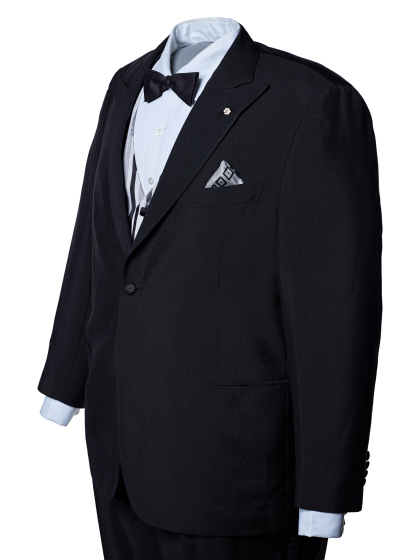
Best known for recalibrating the language of contemporary jazz, Peterson received numerous honors, including seven Grammy Awards and a Lifetime Achievement Award from the Recording Academy. During the event, Kelly Peterson, widow of Oscar Peterson, donated a selection of objects from his career, including a bespoke tuxedo ensemble, and photographer Edward Gajdel gifted a 1995 portrait of Peterson to the museum’s permanent collections. The objects will be preserved as part of the museum’s collections and made available for research and potential future display.
“Few musicians have left as lasting a mark on jazz as Oscar Peterson,” said Anthea M. Hartig, the museum’s Elizabeth MacMillan Director. “We celebrate the extraordinary heritage and history of American jazz by looking across 25 years of programming and encourage people of all ages to immerse themselves in the music that is the soundtrack to our history.”
With his technical virtuosity, Peterson redefined the possibilities of the jazz piano and was anointed “the Maharaja of the Keyboard” by Duke Ellington. Peterson’s 2002 memoir, A Jazz Odyssey, references the significance of dress among jazz musicians, underscoring how clothing functioned as both a personal statement and a marker of his professionalism. His custom-made tuxedo demonstrates the broader story of jazz’s evolution and the lived experiences of Black musicians who shaped its trajectory. Designed by the Toronto company Harry Rosen Inc. between 2004 and 2005, the suit was one of three tuxedos Peterson wore on his world tours.
Gajdel (b. 1958) donated his 1995 portrait that captures Peterson leaning on a piano. Taken in Gajdel’s home studio, the image was intended to become the cover for Peterson’s next album. Having collaborated many times, Gajdel photographed Peterson to “visually capture the monumental historical presence of a man who not only shaped the very heart and language of jazz history but also stands at its core,” said museum curator Theodore S. Gonzalves.
The evening concluded with a tribute performance by the Oscar Peterson Centennial Quartet, Ulf Wakenius on guitar, Mark Mclean on drums, Brandi Disterheft on bass and Robert “Robi” Botos on piano, who toured internationally in 2025 to celebrate Peterson’s life and career. The performance featured works from Peterson’s nearly seven-decade career.
JAM is an annual event founded by the museum in 2001 and is now celebrated worldwide. Support for jazz programming at the Smithsonian is made possible by David C. Frederick and Sophia Lynn, lead sponsors of the 2025–2026 Smithsonian Jazz season, with additional support provided by the LeRoy Neiman and Janet Byrne Neiman Foundation; The Argus Fund; the Ella Fitzgerald Charitable Foundation, founding donor of the Smithsonian Jazz Endowment; and an anonymous friend.
Through incomparable collections, rigorous research and dynamic public outreach, the National Museum of American History seeks to empower people to create a more just and compassionate future by examining, preserving and sharing the complexity of our past. The museum, located on Constitution Avenue N.W., between 12th and 14th streets, is open daily except Dec. 25, between 10 a.m. and 5:30 p.m. Admission is free. The doors of the museum are always open online and the virtual museum offers always expanding access to online exhibitions, PK–12 educational materials and programs. The public can follow the museum on social media on Instagram, Facebook and LinkedIn. For more information, visit the museum’s website. For Smithsonian information, the public may call (202) 633-1000.