
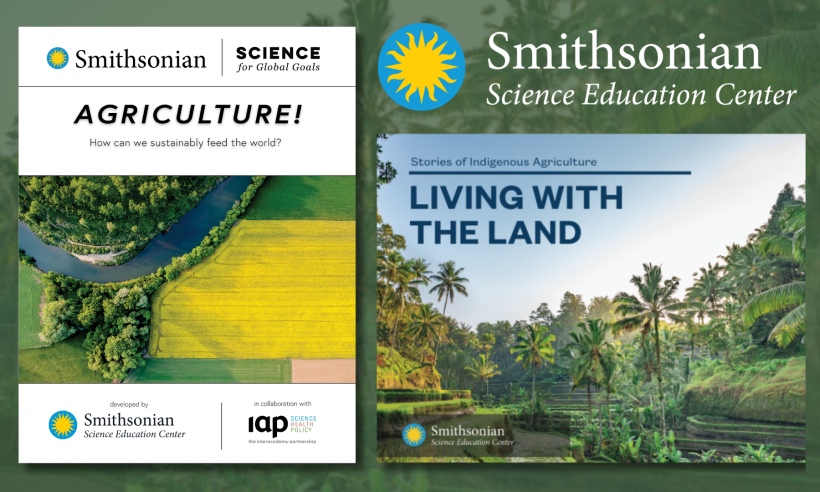
In recognition of World Agriculture Day Thursday, June 11, the Smithsonian Science Education Center has released two new free educational resources for youth. The Smithsonian Science for Global Goals’ Agriculture! How can we sustainably feed the world? guide and the Stories of Indigenous Agriculture: Living with the Land e-book are designed to help youth ages 11–18 (grades six–12) better understand the complexity of agricultural systems both globally and in their own communities and identify ways they can drive positive change.
The Agriculture! guide introduces young learners to explore their local food systems, examine key components and evaluate how each can contribute to more sustainable practices. Through hands-on activities, youth collect and interpret data, make evidence-based decisions and assess potential solutions, building a deeper understanding of their role in shaping a sustainable agricultural future.
The Stories of Indigenous Agriculture: Living with the Land e-book, developed with support from the Smithsonian Women’s Committee, highlights the knowledge and practices of Indigenous communities around the world that have sustained people and ecosystems for generations. By sharing these perspectives, the e-book provides meaningful insight into sustainable approaches to agriculture and offers lessons that remain highly relevant today.
Both resources are available free of charge for youth, educators and community leaders to use in classrooms and other educational spaces. They can download them as PDFs from the Smithsonian Science Education Center’s website at Agriculture! guide and Stories of Indigenous Agriculture e-book.
About the Smithsonian Science Education Center
The Smithsonian Science Education Center (SSEC) is a unit of the Smithsonian Institution that is Transforming K–12 Education Through Science in collaboration with communities across the globe. The Smithsonian Science Education Center is nationally and internationally recognized for the quality of its programs and its impact on K–12 science education.
Visit the Smithsonian Science Education Center’s website to learn more. Connect with the Smithsonian Science Education Center on LinkedIn, Facebook, Instagram and YouTube.