
Exhibition Spotlights the Significance and Resilience of the National Mammal in Celebration of the Nation’s 250th Anniversary
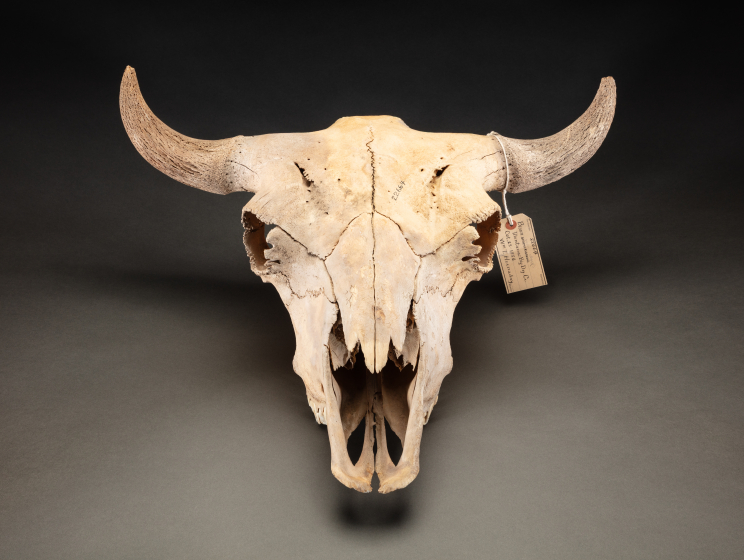
The Smithsonian’s National Museum of Natural History will open a major new exhibition, “Bison: Standing Strong,” Thursday, May 7, inviting visitors to explore the enduring legacy of the American bison from ancient times to the present. Through a variety of anthropological objects, scientific specimens and a mounted bull bison, the exhibition traces the animal’s central role in North America’s ecosystems, cultures and national history, and examines how a species once driven to the brink of extinction made a remarkable comeback.
On view through May 2029, “Bison: Standing Strong” features images of objects drawn from across the Smithsonian’s vast collections as part of the Institution’s commemoration of the nation’s 250th anniversary.
Together with the recently installed bronze bison statues at the museum’s entrance, the exhibition reinforces the National Museum of Natural History’s commitment to honoring the national mammal on the National Mall.
“The incredible story of bison—from their ancient origins to their dramatic decline and remarkable comeback—is truly an American tale,” said Kirk Johnson, the Sant Director of the National Museum of Natural History. “It is fitting that the Smithsonian helped lead the effort to save one of the country’s most magnificent mammals from extinction. The Institution’s work to better understand and conserve this species continues to this day.”
Ancient Arrival
Bison, which are also commonly referred to as ‘buffalo,’ have been a part of the American environment for more than 100,000 years. “Bison: Standing Strong” tracks the evolutionary history of buffalo since the ice age when ancestral bison trudged into North America across frozen sea ice. Once on the continent, they branched into different species, including the hulking Bison latifrons, a now-extinct relative that lived alongside mammoths. The exhibition displays the giant skull of a B. latifrons nicknamed “Junior,” whose horns stretch over 6 feet across. The incredible specimen is on loan from the Idaho Natural History Museum (courtesy of the U.S. Bureau of Reclamation).
A Lasting Relationship
When ancient humans reached the North American continent, they encountered massive herds of bison. “Bison: Standing Strong” displays an artifact from one of these early interactions: a 12,000-year-old bison vertebra pierced with a projectile point.
The relationship between Indigenous communities and bison was strengthened over thousands of years, rooted in a deep ancestral bond where many communities view bison as relatives. Tribal nations depended on the animal for everything from food and clothing to shelter. But bison were not just resources—buffalo also embodied spiritual and cultural significance. Many Native groups continue to honor buffalo with prayers, dances and ceremonies, maintaining a sacred kinship that persists to this day.
“Bison: Standing Strong” explores this vital relationship through several objects, including traditional artworks like a tipi model adorned with buffalo, tools used to process bison hides and even a toy bison fashioned out of the animal’s woolly fur. The exhibition also features perspectives from Indigenous scholars and community members that illustrate why this relationship continues to flourish today.
A Deadly Decade
While bison only became the United States’ official national mammal in 2016, these burly bovines have long been intertwined with the nation’s history. George Washington once hunted bison in what is now West Virginia, and Lewis and Clark encountered vast bison herds that “darkened the whole plains” during their historic expedition (1804–1806).
However, this quintessential American animal was almost wiped out entirely during the late 19th century. The U.S. government encouraged buffalo hunting as part of a larger effort to displace Native communities and upend their traditional ways of life. This effort was aided by the completion of the transcontinental railroad, which brought settlers and sportsmen armed with high-powered rifles westward. During the 1870s, the bison population dwindled from millions to fewer than a thousand individuals.
Conservation Comeback
In 1886, Smithsonian taxidermist William Temple Hornaday ventured west to collect bison and encountered largely empty prairies. To draw attention to the species’ plight, Hornaday mounted several bison specimens into a lifelike display that eventually was exhibited at the Smithsonian for nearly 70 years. He also brought back several living bison to reside on the National Mall behind the Smithsonian Castle, which became a precursor to the National Zoo.
“Bison: Standing Strong” features Hornaday’s story alongside several other historical figures that helped save the bison. These include several individuals, like Indigenous ranchers and female advocates, whose contributions were often overlooked. The exhibition displays bison bones collected by Hornaday and highlights ongoing efforts by museum scientists to extract DNA from these historic specimens. These efforts will provide genetic context to the modern bison populations.
The return of bison has been a boon for the rest of the prairie. “Bison: Standing Strong” explores how bison engineer the prairie ecosystem by grazing grasses, spreading seeds and loosening the soil. The exhibition spotlights several other species, including prairie dogs and black-footed ferrets, that benefit from the presence of bison, and visitors can even touch a lifelike model of a “buffalo chip”—high-nutrient bison dung that promotes plant growth and soil health.
Enduring Significance
Other interactive aspects of “Bison: Standing Strong” include an immersive prairies soundscape, touchable replicas of bison bones and a series of videos. These videos allow visitors to hear firsthand how Indigenous communities maintain their traditional connection with bison today.
The exhibition also features a wall display that illustrates the significance of bison in American history and culture with images of objects from across the Smithsonian’s vast collection. These include bison-themed currency, stamps, artwork and athletic gear.
To complement the new exhibition, the museum will host bison-related educational events throughout the year that will include expert talks, film screenings and hands-on activities that introduce the incredible story of the national mammal to learners of all ages.
“Bison: Standing Strong” received generous support from Barbara and Craig Barrett and the Turner Foundation. The museum’s bison exhibition and programming received funding from the Smithsonian’s “Our Shared Future: 250,” a Smithsonian-wide initiative supported by private philanthropy and created to commemorate the nation’s 250th anniversary and advance the Smithsonian vision for the next 250 years.
About the National Museum of Natural History
The National Museum of Natural History is connecting people everywhere with Earth’s unfolding story. It is one of the most visited natural history museums in the world. Opened in 1910, the museum is dedicated to maintaining and preserving the world’s most extensive collection of natural history specimens and human artifacts. The museum is open daily, except Dec. 25, from 10 a.m. to 5:30 p.m. Admission is free. For more information, visit the museum on its website, blog, Facebook, LinkedIn and Instagram.