
The Smithsonian’s National Museum of Asian Art has announced its 2026 festival commemorating Lunar New Year, a celebration of the arrival of spring and the beginning of a new year on the lunisolar calendar. The event will take place Saturday, Feb. 21, 12–6 p.m., with festivities in both the museum and the Smithsonian’s Arts and Industries Building nearby. The festival is free and open to the public, but attendees will need to reserve timed entry tickets for the Arts and Industries Building.
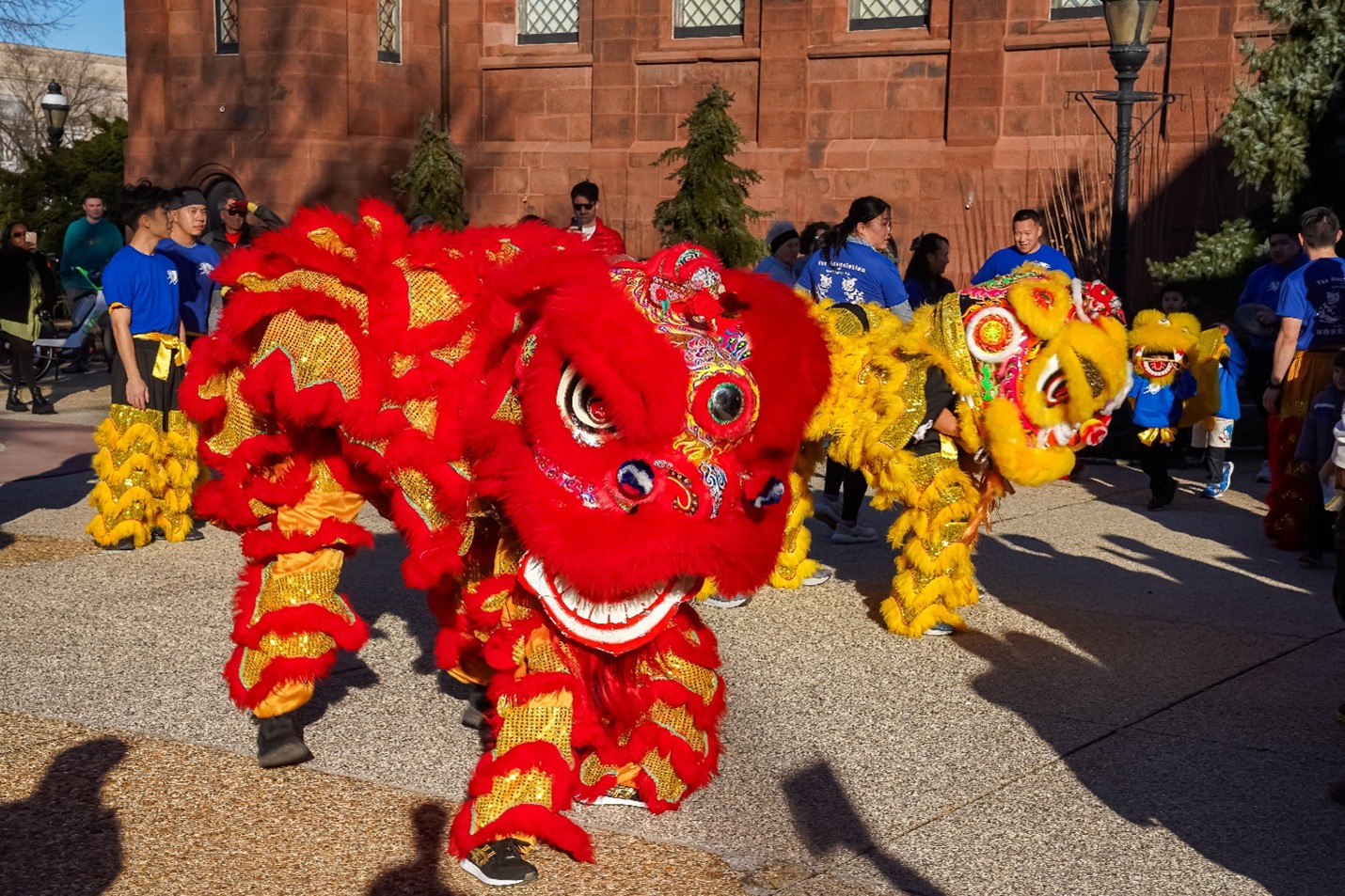
This year’s Lunar New Year festival will celebrate the Year of the Horse with activities and traditions from many Asian countries, including China, Korea and Vietnam. In the Arts and Industries Building, the festivities will include performances, cultural displays and a market of food vendors and craft makers. Special art tours and family activities will take place at the museum, and lion dances will be performed on the plaza outside the museum’s West Building. The full schedule is available online. The museum also offers many digital resources on Lunar New Year, such as virtual tours of related collections, lesson plans and webinars.
The 2025 Lunar New Year festival brought more than 15,000 people to the National Museum of Asian Art.
About Lunar New Year
Commonly known as the Spring Festival in China, Lunar New Year is a 15-day celebration marked by many traditions. The Lunar New Year’s Eve reunion dinner is the highlight that kicks off the holiday, a feast with a spread of symbolic dishes, such as a whole fish representing abundance, that bring good luck and fortune. The 15th and final day of the holiday is the Lantern Festival, during which people have tangyuan, or sweet glutinous rice balls, and children carry lanterns around the neighborhood at night to mark the end of the celebration.
In the Chinese zodiac, 2026 is the Year of the Horse. Different regions across Asia celebrate Lunar New Year in many ways and may follow a different zodiac. Many Asian Americans and Pacific Islanders do not observe the Chinese/lunar zodiac.
About Smithsonian’s National Museum of Asian Art
The Smithsonian’s National Museum of Asian Art is committed to preserving, exhibiting, researching and interpreting art in ways that deepen the public and scholarly understandings of Asia and the world. The museum opened in 1923 as America’s first national art museum and the first Asian art museum in the United States. It now stewards one of the world’s most important collections of Asian art, with works dating from antiquity to the present. The museum also stewards an important collection of 19th- and early 20th-century American art.
Today, the National Museum of Asian Art is emerging as a leading national and global resource for understanding the arts, cultures and societies of Asia, especially at their intersection with America. Guided by the belief that the future of art museums lies in collaboration, increased access and transparency, the museum is fostering new ways to engage with its audiences while enhancing its commitment to excellence.
Located on the National Mall in Washington, D.C., the museum is free and open 364 days a year (closed Dec. 25). The Smithsonian is the world’s largest museum, education and research complex and welcomes 20–30 million visitors yearly. For more information about the National Museum of Asian Art, visit asia.si.edu.