
Donation From Former Michigan Sen. Jack Faxon Supports Collections Care and Development
The Smithsonian’s National Museum of African Art has announced a donation from former Michigan senator Jack Faxon (1936–2020). The donation includes a bequeathed collection of 100 19th- and 20th-century African artworks that Faxon acquired over the course of his life as well as over $2 million in endowment funds to support the care and development of the museum’s permanent collection, which now includes the Jack Faxon Collection of African Art.
The donation is one of the most significant in the museum’s history.
“We thank Jack Faxon for this extraordinary gift,” said John K. Lapiana, director of the National Museum of African Art. “Senator Faxon set an example through leadership in the arts and education, and he understood the value that these fields bring to public life. We will honor his life and legacy by sharing his collection with audiences on the National Mall and beyond. His remarkable generosity will help us fulfill our mission to collect and preserve the arts of Africa for future generations.”
The Faxon gift builds on the National Museum of African Art’s more than 60-year history of encouraging dialogue and connection across cultural boundaries and reflecting the beauty and complexity of African art. The announcement comes alongside Smithsonian Books’ publication of African Art Works, a book that connects the Faxon collection to the museum’s, written by curator Kevin D. Dumouchelle—who also curated the upcoming exhibition “New & Now: A Decade Building the National Collection of African Art,” which will feature an object from the Faxon collection alongside others works that the African Art Museum has acquired over the past 10 years.
“We honor the world by what we contribute to it,” said Faxon in a 2013 episode of his documentary series The Collection, which he created to share his views on life and art.
“The Faxon Collection is already at work making connections with other artworks in the museum’s care, while Jack’s legacy gift greatly will increase our capacity to extend that conversation long into the future,” Dumouchelle said.
About Jack Faxon
Faxon (1936–2020) served 15 years in the Michigan legislature, both in the house and senate, and was the youngest delegate elected to Michigan’s last constitutional convention in 1961.
He began his multifaceted career as a civics and social studies teacher, eventually becoming headmaster of a series of Detroit-based schools focused on immersive language teaching. In 1968, he helped found the City School of Detroit, later known as the International School, and played a key role in shaping a globally oriented curriculum.
Faxon secured state funding for numerous arts institutions. He created the Michigan Council on the Arts in 1966 and helped make Michigan known for having a pro-arts focus in the 1970s and 1980s.
He was also an artist himself, primarily an abstract painter, who exhibited his work in Detroit and Lansing, Michigan.
About the National Museum of African Art
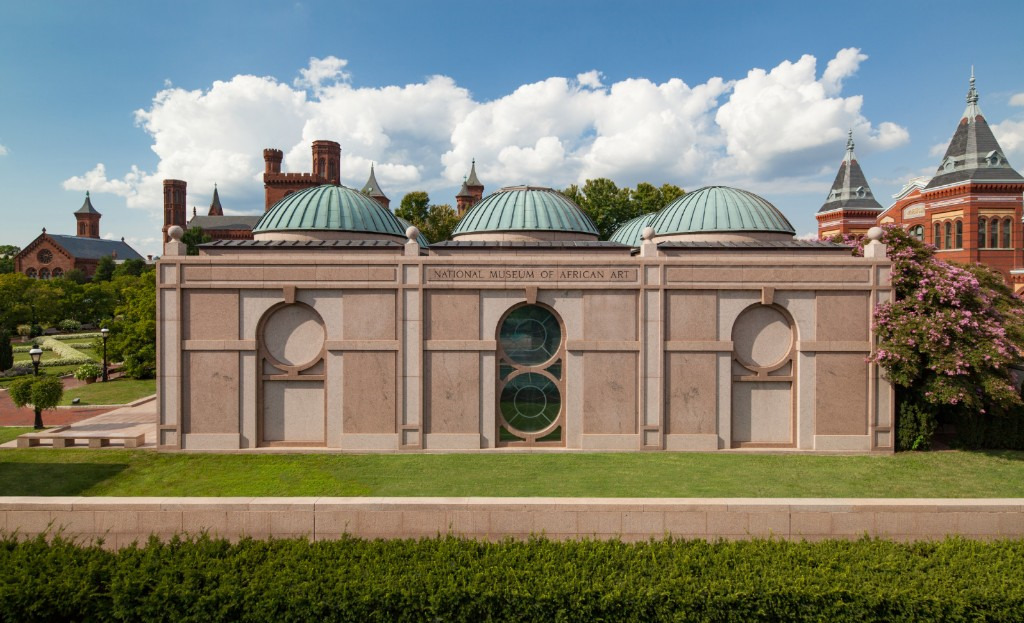
The Smithsonian’s National Museum of African Art is the only national museum in the United States dedicated to the collection, conservation, study and exhibition of Africa’s arts across time and media. The museum’s collection of nearly 13,000 artworks spans more than 1,000 years of African history and includes a variety of media from across the continent.
Beginning as a private educational institution in Washington, D.C., in 1964 to promote cross-cultural understanding, the museum celebrated its 60th anniversary in 2024. Founded by Warren M. Robbins, a former U.S. Foreign Service officer, the museum opened with Robbins’ personal collection in a Capitol Hill townhouse that had once been the home of Frederick Douglass. Robbins was inspired by the Civil Rights Movement and motivated by a desire to share how African art was relevant to American audiences. The museum joined the Smithsonian Institution in 1979 and has continued to expand its vision and collection for six decades.