

“Much Here Is Beautiful: Photography Surveys of the U.S. Bicentennial” Captures a Portrait of the Nation a Half-Century Ago
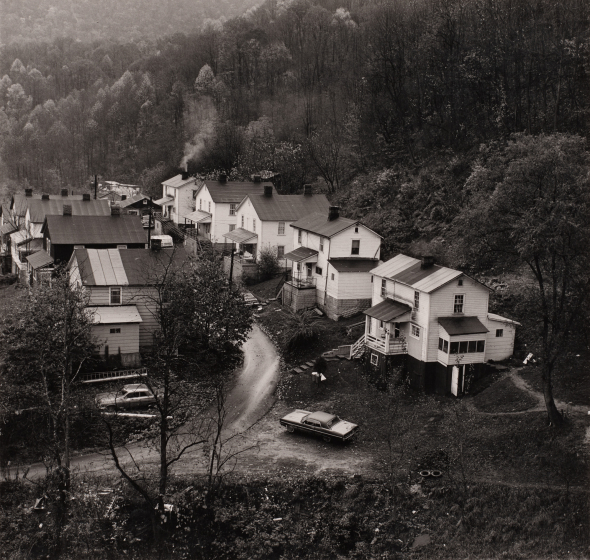
“Much Here Is Beautiful: Photography Surveys of the U.S. Bicentennial” at the Smithsonian American Art Museum brings together, for the first time, photography surveys that capture an expansive and evocative portrait of America in the years surrounding the 1976 U.S. Bicentennial. From the California coast to the Kansas heartland to the streets of New York City, the exhibition features images taken across the country by more than 70 photographers as part of the federally funded Surveys Grant Program. Bringing together 225 photographs, “Much Here Is Beautiful” places the Bicentennial images within the broader legacy of federal survey photography dating back to the 19th century and its lasting impact on generations of artists. “Much Here Is Beautiful” is the culmination of years of research, drawing on the museum’s rich photography holdings and uncovering U.S. Bicentennial survey photographs held in collections nationwide, revealing new discoveries and previously unseen works.
On view at the Smithsonian American Art Museum from Friday, Sept. 18, to Sunday, April 18, 2027, “Much Here Is Beautiful: Photography Surveys of the U.S. Bicentennial” is presented as part of the Smithsonian’s Our Shared Future: 250, featuring a range of exhibitions and programs in honor of the United States Semiquincentennial. The exhibition is organized by John Jacob, the McEvoy Family Senior Curator for Photography, and Krystle Stricklin, assistant curator of photography.
“Since its inception, the Smithsonian American Art Museum’s photography program has been dedicated to collecting and preserving work that reflects the lived experiences of Americans,” said Jane Carpenter-Rock, the acting Margaret and Terry Stent Director of the Smithsonian American Art Museum. “Marking the United States’ 250th anniversary, ‘Much Here Is Beautiful’ underscores the museum’s ongoing commitment to stewarding and interpreting images of the nation, ensuring they remain vital to our understanding of our past and ourselves.”
To celebrate the U.S. Bicentennial in 1976, the National Endowment for the Arts (NEA) created a grant program to fund a series of regional photographic projects that documented people and places across the country. Inspired by the legacy of the Farm Security Administration’s (FSA) photographs during the Great Depression, the NEA envisioned these surveys as a new portrait of the United States during a pivotal chapter in its history. Lasting from the late 1970s to the early 1980s, the NEA funded more than 70 photo surveys, yielding thousands of pictures taken by more than 200 photographers.
In 1983, 1,000 photographs by NEA grant recipients were transferred to the Smithsonian American Art Museum. Among the material received by the museum were prints from 13 of the survey projects, as well as an archive of related documents and ephemera covering the entire grant program. Showcasing a variety of subjects, formats and geographies, “Much Here Is Beautiful” explores the range of surveys funded by the NEA.
“Together, these images present a view of the U.S. from within, as artists turned their cameras toward their own communities with urgency and personal vision,” Jacob said. “At a moment when photography was in transition, the photography surveys of the U.S. Bicentennial affirmed its power to shape how we see the world—and ourselves within it.”
“This exhibition makes an incredible range of photographic material newly accessible to the public, much of which has not been comprehensively revisited since the grants were originally administered,” Stricklin said. “By bringing these surveys into a contemporary context—and situating them within the rich tradition of federal survey photography—we hope audiences will gain a deeper appreciation for its important role and impact on the medium.”
“Much Here Is Beautiful” opens with an introduction to the history of federal survey photography leading up to the U.S. Bicentennial. It includes works from the museum’s collection by Carleton E. Watkins, William Bell, Timothy O’Sullivan and William H. Jackson, produced as part of the 19th-century U.S. Geological Survey, which brought images of the West to many Americans for the first time. Also featured are photographs from the FSA program of the 1930s and 1940s, which demonstrate photography’s transition to documenting all aspects of American life in the 20th century, including works by celebrated photographers Marion Post Wolcott, Dorothea Lange, Walker Evans, Arthur Rothstein, Russell Lee and John Collier.
The exhibition organizes the U.S. Bicentennial surveys into four geographic sections:
- The Northeast, featuring images by Lee Friedlander, who focused on the factories and laborers of industrial towns in Ohio and Pennsylvania. The section also includes Bruce Davidson’s acclaimed “Subway” series depicting New York City in the 1980s, alongside a photographic survey of East Baltimore led by Elinor Cahn, Joan Clark Netherwood and Linda Rich.
- The South, debuting never-before-seen images by Robert Townsend Jones Jr. of Beale Street in Memphis, Tennessee, during a major transition period, developed from negatives that were discovered through curatorial research. This section also includes Martin Stupich’s documentation of the construction of the Metropolitan Atlanta Rapid Transit Authority (MARTA) and photographs from Appalachian communities of West Virginia and Kentucky.
- The Midwest, showcasing images by Joel Meyerowitz that record the look and spirit of St. Louis, dominated by Eero Saarinen’s monumental sculpture “The Gateway Arch.” This section also features large-scale projections of John Margolies’ photographs of roadside attractions, capturing the motels, diners, gas stations and quintessentially American oddities that defined the landscape.
- The West, including works that were part of the “The Rephotographic Survey Project” by photographers Mark Klett and JoAnn Verburg, shown alongside prints of the original landscape images captured by Carleton E. Watkins and Timothy O’Sullivan a century earlier. Also featured are photographs by Reagan Louie chronicling San Francisco’s Chinatown, a neighborhood imbued with the artist’s personal and ancestral memories, as well as a selection of works from Penny Wolin’s “Jackalopes, Cowboys and Coalmines: A Photographic Survey of Energy Development in Wyoming.”
The title of the exhibition comes from the poem “American Journal” (1978) by Robert Hayden, who was the Consultant in Poetry to the Library of Congress from 1976 to 1978, a role today known as U.S. Poet Laureate.
The museum will present a set of public programs in support of the exhibition; details about these programs and additional events will be available on the museum’s website.
A fully illustrated catalog, published by Radius Books in partnership with the Smithsonian American Art Museum, will be available for purchase ($65) in the museum’s store and online.
About the Smithsonian American Art Museum Photography Collection
The Smithsonian American Art Museum began actively collecting photography in the early 1980s, at a time when the art world was beginning to embrace photography. In 1983, 1,000 photographs were transferred from the NEA to the Smithsonian American Art Museum. These works established the museum’s photography collection. Since then, the collection has grown to more than 10,000 works that span the history of the medium. From its inception, the museum’s photography program has focused on works that capture and address the conditions of everyday life in the United States. Embracing the diversity of the medium and its practitioners, the museum collected the history of American photography as a story of invention and inventiveness, and exhibitions such as “American Photographs: The First Century” (1996) and “A Democracy of Images” (2013) were groundbreaking for their recognition of photography’s breadth.
The museum’s photography holdings include works by Laura Aguilar, Berenice Abbott, Ansel Adams, Dawoud Bey, Mathew B. Brady, Imogen Cunningham, Roy DeCarava, Walker Evans, Roland Freeman, Paul Fusco, Ken Gonzales-Day, John Gossage, Sid Grossman, Alfredo Jaar, Dorothea Lange, Hiram Maristany, Ana Mendieta, Trevor Paglen, Gordon Parks, Aaron Siskind, James VanDerZee and Carrie Mae Weems. Deep holdings of works by individual artists include the world’s largest collection of daguerreotypes by African American photographers James P. Ball, Glenalvin Goodridge and Augustus Washington, an extensive set of Lee Friedlander’s “The American Monument” series, the only publicly held set of Diane Arbus’ “A box of ten photographs,” more than 100 works by Irving Penn, more than 100 works by Man Ray and Martha Rosler’s seminal series “House Beautiful: Bringing the War Home.” More information can be found on the museum’s website.
Credit
“Much Here Is Beautiful: Photography Surveys of the U.S. Bicentennial” is organized by the Smithsonian American Art Museum. Major support is provided by the Elizabeth Broun Curatorial Endowment, Ronald Costell, Nion McEvoy and Leslie Berriman, the Charles Robertson Exhibitions Endowment, the Bernie Stadiem Endowment Fund and Trellis Fund. Generous support is provided by Michael Abrams and Sandra Stewart, the Joanne and Richard Brodie Exhibitions Endowment, Crown Equipment Exhibitions Endowment, Daniel W. Hamilton, the Margery and Edgar Masinter Exhibitions Fund, Amanda Minami, MurthyNAYAK Foundation, the David and Anne Sellin Exhibitions Endowment and Lucille and Richard Spagnuolo.
About the Smithsonian American Art Museum
The Smithsonian American Art Museum is the flagship museum in the United States for American art and craft. It is home to one of the most significant collections of American art in the world. The museum’s main building, located at Eighth and G streets N.W., is open daily from 11:30 a.m. to 7 p.m. The museum’s Renwick Gallery, a branch museum dedicated to contemporary craft, is located on Pennsylvania Avenue at 17th Street N.W. and is open daily from 10 a.m. to 5:30 p.m. Check online for current hours and admission information. Admission is free. Follow the museum on Facebook, Instagram, LinkedIn and YouTube. Smithsonian information: (202) 633-1000. Museum information (recorded): (202) 633-7970. Website: americanart.si.edu.