
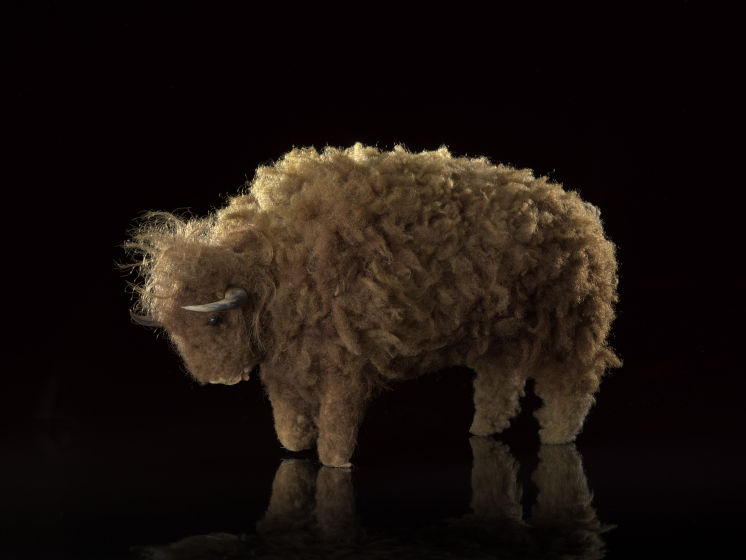
Exhibition Pulls From More Than 1,300 Miniatures In the Museum’s Collection
“Mighty Miniatures,” an exhibition celebrating the intricate art of miniatures, is on view at the Smithsonian’s National Museum of the American Indian in New York Saturday, Nov. 21–Friday, Aug. 20, 2027. Curated by Anya Montiel (Tohono O’odham descent), the exhibition features over 300 pieces of art that showcase the skill of Indigenous weavers, sculptors, carvers and other artists that work on a miniscule scale.
The exhibition includes tiny masterpieces created over a span of nearly two centuries by artists from Indigenous communities from North and South America, as well as Hawai’i and the Caribbean. The selected works of pottery, textiles, carving and basketry demonstrate more than the skills of the artists; they reflect worldviews and cultural expressions, encourage play and transfer intergenerational knowledge.
“‘Mighty Miniatures’ brings together some of the smallest works in the museum collection, reaching across the Western Hemisphere and spanning nearly 200 years,” Montiel said. “It is amazing to see how these miniatures have been made with such skill, ingenuity and detail. This exhibition is a celebration of Indigenous artistry on a small scale and the artists who create them.”
The exhibition is divided into six sections:
- Playing with Scale introduces visitors to the concept of miniatures, placing small works alongside their full-sized equivalents.
- Play Is Important! highlights miniatures as essential teaching tools for children to learn about their world and practice adult skills, and includes cradleboards, mother and child figures, dolls and clothing. There are two subsections bringing together various Lakota toys like a model tipi and buffalo, and Arctic toys like an Inuit dogsled team.
- Watercraft shows Indigenous models of canoes, kayaks and other vessels designed to navigate rivers, lakes and oceans across the Americas. Like their large counterparts, the model boats use similar materials of birchbark, animal hide and cedar wood.
- Architecture reflects a diversity of Indigenous housing styles and materials to refute the stereotype that “all Indians live in tipis” with examples from the Northern Cheyenne, Navajo, Zuni, Yupik, Iñupiaq and Kichwa peoples.
- Skill and Artistry explains one of the reasons why Indigenous artists make miniatures. It is a way for artists to showcase their mastery of materials and techniques. Some artist families, like the Lonewolf family of Santa Clara Pueblo, are known for specializing in miniatures. This section has some of the smallest works in the show, such as a Pomo miniature basket measuring 0.1 by 0.1 inches.
- Tourism and the Art Market is another section answering why Indigenous artists make miniatures. As more tourists traveled to Indigenous communities, artists responded by creating smaller works that were easier to carry over long distances and market as gifts and souvenirs. Some miniatures have become collectible works of art, like Alaskan ivory carvings and Maine fancy baskets, with people seeking miniatures for their personal collections.
Free Opening Program
A family-friendly opening program is scheduled for Saturday, Dec. 12. Multi-disciplinary artist Lance Cardinal (Cree), a finalist on the TV show Best In Miniature, will lead visitors in mini drum making sessions, recommended for ages 6 and up accompanied by an adult caregiver. Sessions will begin at 11 a.m., 1 p.m., 2 p.m. and 3 p.m.
Gallery tours by Montiel will illuminate the stories behind the objects and discuss how the exhibition came together. Tours begin at noon and 2:30 p.m.
About the Museum
In partnership with Native peoples and their allies, the National Museum of the American Indian fosters a richer shared human experience through a more informed understanding of Native peoples. The museum in New York is located at 1 Bowling Green. For information about the museums, including hours and directions, visit americanindian.si.edu. Follow the museum on social media @SmithsonianNMAI.