
Shirley Z. Johnson Collection Showcase Is Part of Museum’s Spotlight of American Women Collectors To Honor Nation’s 250th
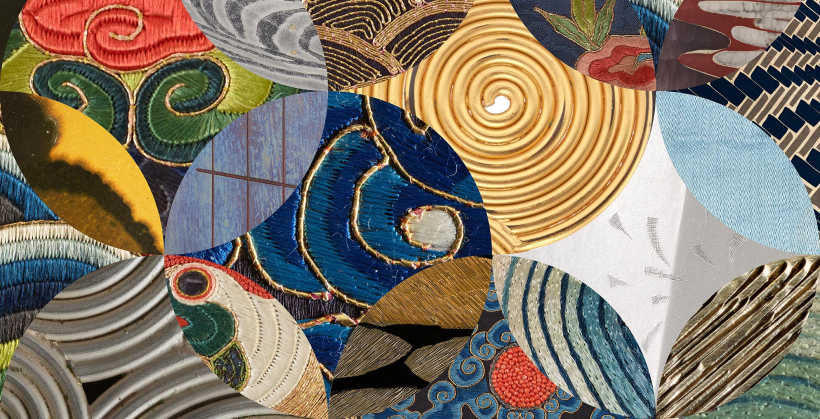
A new exhibition at the Smithsonian’s National Museum of Asian Art brings together late-imperial Chinese textiles and contemporary Japanese metalwork—two different art forms separated by time, material and place—to explore overlooked similarities. Open Saturday, Nov. 7, 2026, through Sunday, Nov. 28, 2027, “Woven and Cast: Chinese Textiles and Japanese Metalwork from the Shirley Z. Johnson Collection,” features the collections of philanthropist Shirley Z. Johnson (1940–2021) that she donated to the museum. When displayed side by side, the textiles and metalworks reveal unexpected commonalities in texture and luminosity that result in striking visual combinations.
The exhibition joins the museum’s series spotlighting the art collections of American women in honor of the United States’ 250th anniversary. Johnson was a lawyer, autism advocate and resident of Washington, D.C., and served on the museum’s board from 2004 to 2012 and from 2017 to 2021. Drawn to luminous materials and intricate craftsmanship, she exclusively collected 20th to 21st-century Japanese metalwork and Chinese textiles from China’s last dynasties—the Ming and Qing dynasties in the 15th–19th centuries.
“With this exhibition, we aim for the intentionally unexpected, showcasing the surprising connections that can be found across materials from different histories and artistic traditions,” said Chase Robinson, director of the National Museum of Asian Art. “We honor the vision of our late trustee and exemplary American philanthropist Shirley Z. Johnson, inviting our audiences to share in the curiosity that guided her unique collection.”
Throughout the gallery, visitors will be encouraged to grasp the way both categories of objects glow, shimmer and sparkle. Silk threads, some wrapped with peacock feather filaments and some with metal, and used for embroidery, will appear side-by-side with gold, silver, copper and other alloys that were worked by casting and hammering. The complexity of the featured objects reflects generations of knowledge passed down through textile and metalworking traditions in those respective cultures.
The Chinese textiles on display feature a variety of symbols, which were used to indicate court rank and the status of the wearer and communicate wishes for prosperity and longevity. The imagery draws on elements of natural landscapes, animals and birds. Featured Japanese metalwork similarly draws images from the natural world to connect the physical to concepts of harmony and artistic expression.
A two-part video in the exhibition will demystify the methods behind the art. Close-up footage with commentary by textile conservators describes the process of making and preserving the woven and embroidered textiles. Another video featuring contemporary Japanese metalwork artists, Ōsumi Yukie and Tanaka Terukazu, details the casting, hammering and other processes used to shape metals into delicate or bold sculptural artworks.
“We wanted to explore how artists separated by time and culture each found innovative ways to capture radiance in the works they created of different materials,” said Jan Stuart, curator of Chinese art and co-curator of this exhibition. “Metal strips can be woven like fabric, and textiles with metallic threads can shine like gold.”
“The shared qualities of the distinct artworks in this exhibition also demonstrate cross-cultural currents,” said Sol Jung, co-curator of the exhibition and former Shirley Z. Johnson Assistant Curator of Japanese Art. “For example, the movement of water was an integral theme in both Japanese and Chinese art, and we see an abundance of aquatic themes in both the metalwork and textiles. This represents cultural connection and shared sources of inspiration among the artists.”
Other exhibitions in the museum’s showcase of American women collectors include “Adorned in Gold: Japanese Lacquer from the Jacqueline Avant Collection,” which will open Saturday, Nov. 21, and features the collection of Jacqueline Avant (1940–2021) and her passion for maki-e, a unique style of Japanese lacquerware. “Of the Hills: Pahari Paintings from India’s Himalayan Kingdoms” ran from April 18 to July 26 and highlighted art historian Catherine Glynn Benkaim’s rare collection of paintings depicting India’s Pahari (hill) region.
About Shirley Z. Johnson
Johnson (1940–2021) was a scholarly collector, antitrust attorney, autism advocate and resident of Washington, D.C., for nearly 50 years who served on the board of the National Museum of Asian Art from 2004 to 2012 and from 2017 to 2021.
The National Museum of Asian Art is honored to be the primary beneficiary of Johnson’s philanthropy, which embraced many institutions and causes, including the Walters Art Museum and the George Washington University Textile Museum. Johnson’s extensive gifts to the National Museum of Asian Art include her archives on collecting and a significant collection of Ming- and Qing-dynasty textiles. She also bequeathed more than 60 outstanding artworks by contemporary Japanese artists who work in metal. A pioneering collector in this field, Johnson helped establish the global recognition it receives today.
After her retirement in 2009, Johnson passionately pursued her interests in Asian arts and supporting autism, including founding the innovative TRI Project for children in Iowa and serving on the Board of DC Peers, an organization providing social programs and activities for high schoolers and young adults with autism. Johnson was a recognized art collector and published author on Chinese textiles and Japanese metal art.
Credit
Support for “Woven and Cast: Chinese Textiles and Japanese Metalwork from the Shirley Z. Johnson Collection” and the museum’s Japanese art program is provided by the Mitsubishi Corporation. Additional support is provided by the Shirley Z. Johnson Endowment Fund and Dr. Soumyo D. Moitra.
About the Smithsonian’s National Museum of Asian Art
The Smithsonian’s National Museum of Asian Art opened in 1923 as the United States’ first national art museum and the first Asian art museum in the country. It now stewards one of the world’s most important collections of Asian art, with works dating from antiquity to the present. The museum also hosts an unparalleled collection of 19th- and early 20th-century American art.
Through an ambitious program of collecting, conservation, exhibitions, programming and research—both on-site and online—the museum serves as a global and national resource for understanding the arts and cultures of Asia and their interaction with America, past and present. By presenting the arts and cultures of Asia in their extraordinary richness, the museum furthers cross-cultural understanding and aims to exemplify foundational ideals of curiosity, creativity and respect.
Located on the National Mall in Washington, D.C., the museum is free and open 364 days a year (closed Dec. 25). The Smithsonian is the world’s largest museum, education and research complex and welcomes millions of visitors yearly. For more information about the National Museum of Asian Art, visit asia.si.edu.