
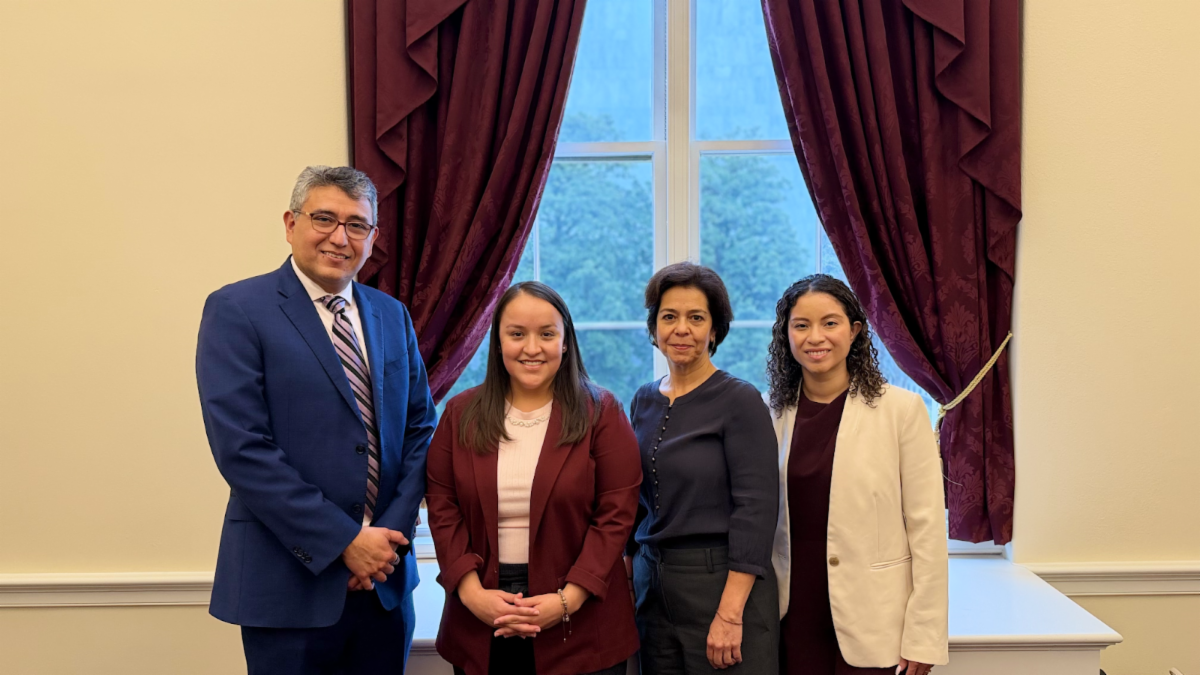
| Washington, D.C. — Yesterday, the Congressional Hispanic Caucus (CHC) in collaboration with Alianza Americas, hosted a congressional briefing on the urgent situation facing Temporary Protected Status (TPS) holders from El Salvador, Honduras, and Nicaragua, highlighting the economic contributions of TPS holders and the growing uncertainty surrounding their work authorization and legal status.
Advocates, policy experts, and directly impacted community members briefed congressional offices on the looming March 2026 timeline for Central American TPS holders and the urgent need for administrative clarity and congressional action. Approximately 170,125 TPS holders from El Salvador, 51,225 from Honduras, and 2,910 from Nicaragua currently live and work in the United States, contributing billions in taxes and helping sustain key sectors of the U.S. economy. Many TPS holders have lived in the United States for decades, raising families and building careers. An estimated 314,000 U.S. citizen children live in households with a TPS holder from Central America, underscoring how deeply rooted these families are in American communities. Speakers included Patricia Montes of Centro Presente; Yanira Arias, Dulce Guzman, and Helena Olea of Alianza Americas; Abel Nuñez of CARECEN DC; Jackie, a TPS holder from Honduras and Centro Presente member; and Yareliz Mendez-Zamora of Seeds of Resistance. Without clear guidance from the U.S. Citizenship and Immigration Services (USCIS), confusion surrounding employment authorization documents threatens to disrupt workplaces, families, and local economies nationwide. “TPS holders from Central America have spent decades working, paying taxes, and building communities across the United States,” said CHC Chair Adriano Espaillat (NY-13). “These families are not temporary. Congress and the administration must act with urgency to provide clarity and stability for TPS holders who are deeply rooted in our communities and essential to our economy.” TPS holders from these countries work primarily in essential industries including construction, agriculture, landscaping, hospitality, and other labor-intensive sectors that power local economies and face persistent labor shortages. Collectively, TPS holders from Central America contribute an estimated $6.5 billion annually to the U.S. economy. Participants emphasized that without immediate administrative clarification and congressional oversight, thousands of lawfully authorized workers could face job loss and unnecessary disruption. The Congressional Hispanic Caucus will continue working with partners and stakeholders to ensure TPS holders and their families receive the clarity and stability they deserve. |
| About the Congressional Hispanic Caucus (CHC)
The Congressional Hispanic Caucus (CHC) is 43 members strong. The CHC serves as a forum for the Hispanic Members of Congress to coalesce around a collective legislative agenda. The Caucus is dedicated to voicing and advancing, through the legislative process, issues affecting Hispanics in the United States, Puerto Rico, and the Commonwealth of the Northern Mariana Islands. For more information, please visit chc.house.gov. |