
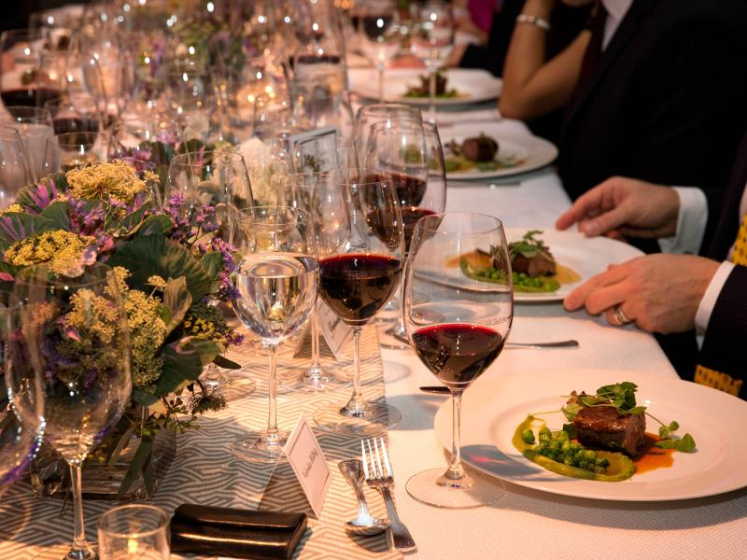
Winemakers’ Dinner To Celebrate American Wine, Food and History
The Smithsonian’s National Museum of American History will commemorate the 50th anniversary of the famous 1976 “Judgment of Paris” wine tasting competition and the nation’s 250th anniversary of the Declaration of Independence with the eighth annual Smithsonian Winemakers’ Dinner April 14. This year’s signature event, “The Judgment of Paris: There’s more to the story…” will bring together visionary vintners, culinary leaders and supporters of the museum to celebrate the intertwined histories of American wine, food and democracy.
“The 1976 Judgment of Paris forever changed the way the world viewed American wine,” said Anthea M. Hartig, Elizabeth MacMillan Director of the National Museum of American History. “Fifty years later, as we commemorate the nation’s 250th anniversary, we are honored to celebrate the winemakers, chefs and communities whose creativity and dedication transformed American wine and food. We are thrilled to share those stories with the public through our collections and programs.”
Held in Paris May 24, 1976, the “Judgment of Paris” was a formal blind tasting of red and white wines that pitted the best of the new California wines against the best of Bordeaux and Burgundy. When the scores were tallied, the 1973 Chateau Montelena Chardonnay and the 1973 Stag’s Leap Wine Cellars Cabernet Sauvignon placed first in their respective categories, ahead of the French wines, upending long-held assumptions about who could make premium wine. The outcome brought international acclaim to the winemakers, their wineries and Napa Valley. It is widely regarded as pivotal to the rebirth of American winegrowing and winemaking. The story of the tasting in Paris and original bottles of the winning wines are on view in the museum’s exhibition, “FOOD: Transforming the American Table.”
The 2026 Winemakers’ Dinner will evoke the spirit of the 1976 tasting while offering a fresh perspective on its legacy. With the tagline “There’s more to the story…,” the evening will broaden the scope to explore and celebrate the history of three additional Napa Valley wineries that participated in the original tasting and continue to produce wines that reflect Napa today: Freemark Abbey, Clos Du Val and Mayacamas. Guests will enjoy a dinner featuring special wines from these wineries and conversations with winemakers.
The culinary experience will be developed in collaboration with chef Nora Pouillon, founder of Restaurant Nora in Washington, D.C., the first certified organic restaurant in the United States and an early leader in the farm-to-table movement.
Tickets to the event can be purchased online.
Proceeds from the Winemakers’ Dinner support the Smithsonian Food History Project and the museum’s signature exhibition, “FOOD: Transforming the American Table.” This exhibition explores the big changes in food production, distribution and consumption since 1950 and considers how new technologies and innovations, influential people and broad shifts in social and cultural life contributed to the transformations in how and what people eat. The “Wine for the Table” section looks at the reimagining of American wine and winemaking in the second half of the 20th century, when a community of California dreamers sparked a revolution in a bottle that changed the world of wine.
The museum’s event in celebration of the 50th anniversary of the Judgment of Paris is made possible by Clark Construction together with Don Kollmorgen and Louise Woerner.
Through incomparable collections, rigorous research and dynamic public outreach, the National Museum of American History seeks to empower people to create a more just and compassionate future by examining, preserving and sharing the complexity of our past. The museum, located on Constitution Avenue N.W., between 12th and 14th streets, is open daily except Dec. 25, between 10 a.m. and 5:30 p.m. Admission is free. The doors of the museum are always open online and the virtual museum offers always expanding access to online exhibitions, PK–12 educational materials and programs. The public can follow the museum on social media on Instagram, Facebook, and LinkedIn. For more information, visit the museum’s website. For Smithsonian information, the public may call (202) 633-1000.